How to Check Credit References for a Business
Author: Nick Alex Gallo
January 23, 2026
7 min read
TABLE OF CONTENTS
- 1. Step 1 – Request Trade References From the Business
- 2. Step 2 – Verify the Business Trade References Are Legitimate
- 3. Step 3 – Contact References and Ask the Right Questions
- 4. Step 4 – Pull the Business’s Credit Report
- 5. Step 5 – Review Financial Statements and Bank References
- 6. Monitor Your Own Business Credit With FairFigure
Start your credit building journey for your business

Credit references provide insight into a company’s financial habits, helping you gauge whether they’re likely to meet their obligations to you. As a result, they can be invaluable when you need to assess a prospective business partner.
If you’re looking to do your due diligence before committing to a relationship, this step-by-step guide will show you how to check credit references for a business.
Step 1 – Request Trade References From the Business
Trade references are a specific type of business credit reference. They come from vendors that’ve offered the business you’re investigating some form of credit in the past.
In many cases, that’s simply extended payment terms, such as the right to complete purchases on a net 30 or net 60 schedule.
Start by asking the business for a list of these references, ideally including three to five that they work with regularly. These can tell you a lot about the business’s payment habits and overall credit management.
Fortunately, legitimate companies are typically used to this request, especially when they’re waiting for a credit decision from a potential lender or partner. In other words, declining to provide the information is usually a bad sign.
- Make sure to secure the following details:
- Full vendor name
- Physical address
- Point of contact
- Phone number
- Email address
In addition, ask for some basic insights into the relationship between the business and the vendor. For example, that should include how long they’ve worked together and what kind of credit arrangement they have.
Finally, make sure the business understands that you’ll be contacting these vendors directly. This transparency may encourage the business to provide references that will genuinely be useful for assessing their creditworthiness.
Step 2 – Verify the Business Trade References Are Legitimate
Before you start contacting anyone, take the time to confirm that each trade credit reference you received is genuine and accurate. This helps you avoid wasting time on fabricated references or incorrect contact information.
Start by checking that the vendor actually exists and is operating under the provided name. Typically, the easiest option is to look up the company’s website or profile on platforms like LinkedIn and Google My Business.
Once you’ve verified the business itself, make sure the physical address, phone number, and email you were given match the publicly listed information. If something doesn’t line up, dig into the reason for the discrepancy before moving forward.
Next, confirm that the contact person is legitimate and relevant. Ideally, they should be someone in accounts receivable, accounts payable, or another role that regularly handles billing and payment relationships. You can often verify job titles and departments through LinkedIn or the vendor’s website.
Step 3 – Contact References and Ask the Right Questions
Once you’ve confirmed that each business trade reference is legitimate, you can start reaching out to the vendors. Typically, the easiest option is to call them directly, as emails are slower and likely to get lost in the shuffle.
However you get in contact, start by confirming the basics of the relationship. Ask how long the vendor has worked with the business, what product or service they provide, and what credit terms they have in place.
This should help you confirm the significance of the relationship.
Next, move on to payment behavior, which is often the most valuable credit insight you’ll receive. Ask whether the business always makes timely payments, occasionally fails to meet its obligations, or has a history of missed payments.
Occasional delays may not be cause for concern, but being late repeatedly is a clear red flag.
In some cases, it can be beneficial to dig deeper into the details of the business’s transaction history as well. For example, you might ask questions like:
- How often does the business place orders?
- What is the typical purchase amount?
A good way to wrap things up is to ask whether the vendor would recommend offering credit to the business. They’ll often be candid about whether they trust a customer, and that simple gut check can be invaluable.
Step 4 – Pull the Business’s Credit Report
A business credit report provides an objective record of a company’s credit history, at least for each credit account reported to the agencies that compile these documents. That primarily includes Dun & Bradstreet (D&B), Experian, and Equifax.
More specifically, their reports detail information like the following:
- Vendor and financial institution tradelines
- Payment history
- Outstanding account balances
- Credit limit totals and utilization
- Liens, judgments, and bankruptcies
- Business credit score and credit risk ratings
Unlike personal credit score data, there are no federal regulations guaranteeing access to business credit information for your company or others. As a result, you’ll typically have to pay out of pocket to gain access to these reports.
You can purchase them from each business credit bureau directly or through a third-party vendor, such as Business Credit Reports, Inc. Either way, the most cost-effective strategy is usually to buy in bulk to take advantage of volume discounts.
For example, D&B sells a single Business Information Report Snapshot for about $140, while a pack of 10 from the credit reporting agency costs about $1,190. That works out to a per-unit cost of $119, saving you $20 per report and 15% overall.
Step 5 – Review Financial Statements and Bank References
Financial statements are the ultimate source of truth regarding a business’s money management. They can tell you everything you need to know about its financial position, profitability, and cash flow, all of which directly affect its ability to meet obligations.
Unless the business is a public company, you’ll typically only be able to get copies of the financial statements from it directly.
Ask for the balance sheet, income statement, and cash flow statement, but be aware that some small businesses may not have the latter.
Once you have these documents, review them for anything that might indicate financial risk.
For example, that might include declining revenue, rising debt levels, or a low current ratio, which suggests the business might not have enough liquidity to cover its short-term debts.
Bank references can offer similar insight from a different angle, making them a valuable supplement. They typically provide details like the length of the banking relationship, the standing of each account, and the history of overdrafts.
Be aware that in most cases, only the customer can request a bank reference, so you’ll have to get these from the business too.
Monitor Your Own Business Credit With FairFigure
Just as you evaluate other companies before committing to a relationship, many organizations will perform the same due diligence on you, such as when you undergo a credit check as part of a credit application with a potential lender.
Monitoring your business credit helps you stay ahead, giving you the chance to address potential red flags before they can affect important opportunities. This makes it an invaluable tool in working toward or protecting a good credit score.
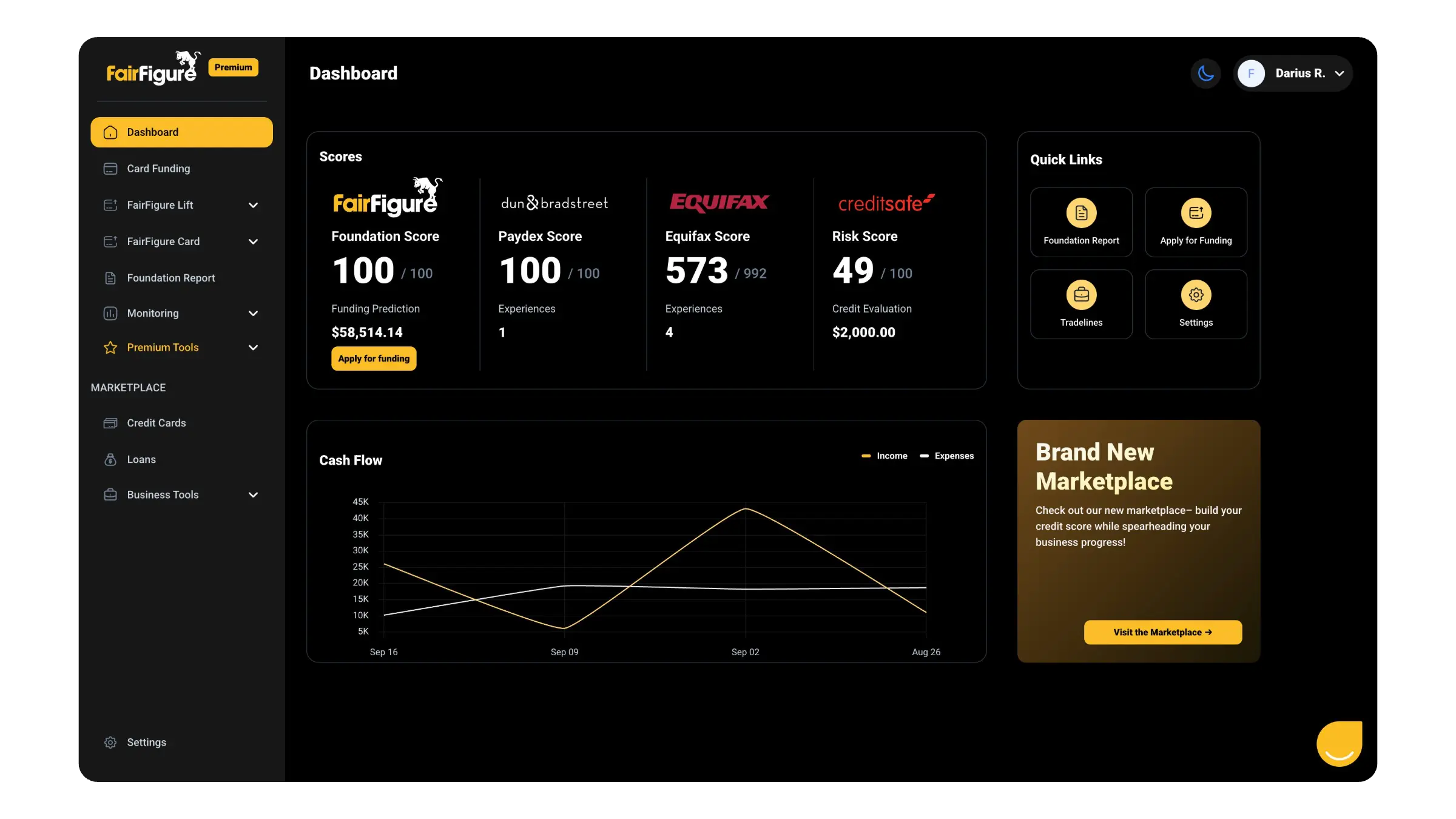
FairFigure makes monitoring easy by giving you access to your business credit reports and scores from D&B, Equifax, and Creditsafe in one convenient location.
You’ll also unlock our in-house Foundation Report and Score, which adds an additional perspective into your credit and finances.
Sign up for FairFigure today to take control of your business credit.
More articles
Read More >
August 11, 2026
13 min read

August 11, 2026
7 min read
August 11, 2026
7 min read
Start your credit building journey for your business
Start your credit journey now with FairFigure