Net 15 Accounts
Author: Nick Alex Gallo
January 09, 2026
11 min read
TABLE OF CONTENTS
- 1. What Are Net 15 Accounts and Payment Terms
- 2. How Net 15 Payment Terms Work
- 3. Net 15 vs Net 30 vs Net 60 Payment Terms
- 4. Benefits of Net 15 Payment Terms for Buyers
- 5. When Vendors Offer Net 15 Instead of Net 30
- 6. Do Net 15 Accounts Help Build Business Credit?
- 7. Best Vendors and Suppliers That Offer Net 15 Terms
- 8. How To Qualify for Net 15 Vendor Accounts
Start your credit building journey for your business

Net 15 accounts can help you build business credit and smooth out your cash flows, even if you have limited business history.
Here’s what you should know about them before applying, including how they work, who the best providers are, and what you need to qualify.
What Are Net 15 Accounts and Payment Terms
Net 15 accounts are vendor credit terms that grant you 15 days of interest-free financing with the account issuer. In other words, they allow you to pay off your invoice balances up to 15 calendar days after the purchase date instead of paying upfront.
These accounts are a type of trade credit, which means they come directly from vendors and suppliers rather than banks, credit unions, and other financial institutions.
Because of this, net 15 accounts are often easier to qualify for than traditional credit accounts, like business credit cards and loans. This makes them most attractive to business owners who may struggle to secure other forms of financing, such as:
- New business owners with less than two years in operation
- Business owners with limited or poor business credit history
However, net 15 accounts may be less useful for managing cash flow than traditional revolving credit accounts. Their usage is limited to a single vendor, and their repayment window is even shorter than other forms of trade credit.
How Net 15 Payment Terms Work
Using a net 15 account, you can order goods and services from the issuing vendor without having to pay upfront. Instead, the vendor will generate an invoice for each order, after which you’ll have 15 days to pay off your balance.
Typically, the 15-day repayment period starts on the invoice date—the day the vendor generates your invoice—not when you receive your goods, even if it takes several days for them to ship to you.
Interest usually doesn’t accrue during the repayment period, but failing to pay off your balance by the due date may trigger late fees. Repeated delinquencies may also result in the vendor lowering your credit limit or closing your account.
Some vendors offer a small discount for paying your balance before the due date, such as 2% off for completing payment within 10 days. You’ll often see this described as a “2/10 net 15 payment term.”
In many cases, vendors won’t allow you to pay off your net 15 account balance with a business credit card or other form of financing. Instead, you’ll typically need to use methods like making an ACH transfer or cutting a physical check.
Depending on your net 15 account’s credit limit and the issuing vendor’s policies, you may need to close each invoice before making another purchase on net 15 terms.
For example, say you purchase $500 in office supplies from a supplier on March 1st using your 2/10 net 15 account. You’d have to pay by March 11th to get the 2% immediate payment discount and by March 16th to avoid triggering penalties.
Net 15 vs Net 30 vs Net 60 Payment Terms
Net 15, net 30, and net 60 are all extended repayment terms that allow you to avoid paying for vendor purchases upfront. The primary difference lies in how much time you have to pay off your invoice balances before they’re considered late.
While net 15 accounts provide you 15 days of interest-free financing, a net 30 account extends the repayment window to 30 days. This is the most common trade credit term, aligning well with a standard monthly payment cadence.
As you can probably guess, net 60 payment terms let you pay off your balance up to 60 days after the invoice date, making it the most flexible option of the three.
Because net 60 terms provide so much time to pay, offering them can begin to undermine a vendor’s cash flows, especially for smaller companies. As a result, net 60 terms are less common than net 30 terms and typically harder to qualify for.
Some vendors will let you apply for one of these options specifically, but others will simply make an offer when you apply for flexible payment terms.
Benefits of Net 15 Payment Terms for Buyers
For buyers, the primary benefit of net 15 payment terms is the flexibility to delay vendor payment for up to 15 days after the invoice date—without paying interest or relying on traditional debt financing.
That may not be enough time to convert the goods or services you purchase into cash, but it can still help improve short-term cash flow management.
At the very least, you have a couple of weeks to gather the funds to cover each order, which often helps bridge timing gaps between expenses and income.
Another benefit of net 15 payment terms is that they’re often relatively easy to qualify for, even as a business owner with thin or damaged credit. They have a shorter repayment window than other forms of trade credit, making them lower risk for vendors.
This gives you the opportunity to establish an initial relationship with a vendor. If you use your net 15 payment terms responsibly, you can build trust and rapport that may eventually lead to more favorable repayment terms.
In addition to potential upgrades to net 30 payment terms, positive payment history may lead to other account benefits, such as early payment discounts.
When Vendors Offer Net 15 Instead of Net 30
Vendors typically offer net 15 payment terms when working with unproven buyers. For businesses without an established payment history, shorter repayment windows reduce the risk of delinquency while still allowing limited access to trade credit.
As a result, you’re most likely to receive net 15 terms during your first two years of business, when you lack operational history and have a relatively thin business credit report.
On the vendor’s end, net 15 terms are also common among smaller suppliers or businesses with tighter cash flow constraints.
Offering a longer payment term, like net 30 or net 60 terms, can quickly erode liquidity and strain working capital, especially when buyers fail to pay on time.
The industry you operate in can also play a role. Typically, those with tight margins and rapid cash flow needs favor shorter invoice payment terms. Meanwhile, those with longer production cycles and higher transaction values can often support longer terms.
In many cases, net 15 accounts provide a valuable middle ground for vendors. They allow these companies to attract customers and remain competitive without taking on the financial risk involved in longer net terms.
Do Net 15 Accounts Help Build Business Credit?
As a form of trade credit, net 15 accounts can potentially help you build business credit. However, whether or not a given account does so in practice depends on the issuing vendor’s credit reporting policies.
Specifically, a vendor must report their net 15 account to at least one major business credit bureau for it to appear in your company’s credit report and contribute to your business credit score.
These include Dun & Bradstreet (D&B), Equifax Business, and Experian Business.
Fortunately, many vendors know that trade credit accounts are a good way to start building business credit. With that in mind, they often use the promise of credit reporting to attract new customers and encourage timely payment.
However, reporting net 15 accounts is never legally required. It also costs money, so there’s no guarantee that a vendor will provide the benefit.
As a result, it’s important to verify whether or not a vendor reports to the business credit bureaus before applying for a net 15 account—especially if your main goal is to improve your company’s credit score.
You’ll often find the answer online through the company’s website, but if not, you can always call directly for more details.
Best Vendors and Suppliers That Offer Net 15 Terms
It’s rare for vendors to explicitly advertise net 15 payment terms. Instead, net 15 terms are typically assigned due to your business history, business credit score, and perceived risk level when you apply for trade credit with a vendor.
If you’re interested in using net 15 accounts as some of your first business tradelines, it often makes sense to target verified net 30 accounts and vendors instead.
Depending on your qualifications, they may assign you net 15 terms, but you could also be approved for a longer repayment window.
Some popular options to consider include:
- Uline: A large supplier of shipping, packaging, and industrial products that reports to D&B and Experian Business. There's no annual fee, but you typically have to place an initial order of at least $50 to $100.
- CEO Creative: A branding and promotional service provider that also carries business supplies. It reports to D&B, Equifax Business, and Creditsafe, but there’s a $20 per quarter or $10 per month fee.
- Wise Business Plans: A business planning service that can also help with immigration visas, pitch materials, and more. It reports to Equifax Business, Experian Business, and Creditsafe, but there’s a $99 annual fee and a minimum annual spend of $164.
To find more companies that can help you build a better business credit score, read our guide on the Best Vendors to Build Business Credit.
How To Qualify for Net 15 Vendor Accounts
To qualify for net 15 vendor accounts and other extended repayment terms, you’ll usually need to meet some initial business formation requirements. For example, that often includes:
- Having a U.S. mailing address
- Providing an employer identification number (EIN)
- Filing as a separate legal entity with the Secretary of State
Your credit history also plays a significant role, with vendors typically checking your business credit first. They’ll often want to make sure you have no major negative entries, like extended delinquencies, defaults, or collections.
As long as none of these are present, many net 15 and net 30 providers will accept applicants with thin credit files. However, some will consider your personal credit history as a substitute. These typically note that they require a personal guarantee.
If you already have a business relationship with the vendor, your purchase history can also be a way to establish creditworthiness, even if you’ve been paying for them upfront.
Lastly, you’ll often need to complete an order for a minimum amount before you can apply for extended repayment terms. If you qualify, there may also be a recurring monthly or annual fee to maintain access.
Calculating Net 15 Payment Due Dates
Calculating net 15 payment due dates can be surprisingly tricky, largely due to confusion over the start of the repayment window.
The standard practice is to start the 15-day countdown on the invoice date, which is the day the vendor generates the invoice. However, this isn’t always the case, as some vendors will use dates like the following instead:
- Invoice receipt: This approach starts the countdown on the day you receive the invoice electronically or by mail.
- Delivery or completion: This practice starts the window on the day the vendor provides the product or completes the service you purchased.
- End-of-month (EOM): Less commonly, vendors may start the 15-day count at the end of the month for all invoices issued during it.
If you qualify for a net 15 account and aren’t sure which schedule your issuer uses, don’t assume it’s the invoice date. That could cause late payment, damaging your credit and relationship with the vendor.
Fortunately, most vendors make it easy to determine when payment is actually due. It should be on your copy of the invoice, but if not, you can always contact them directly to confirm.
Build Business Credit With FairFigure
Net 15 and other trade credit accounts can be powerful tools for building business credit, but you have to open multiple accounts to make meaningful progress. This can be time-consuming and surprisingly expensive as fees and minimum orders add up.
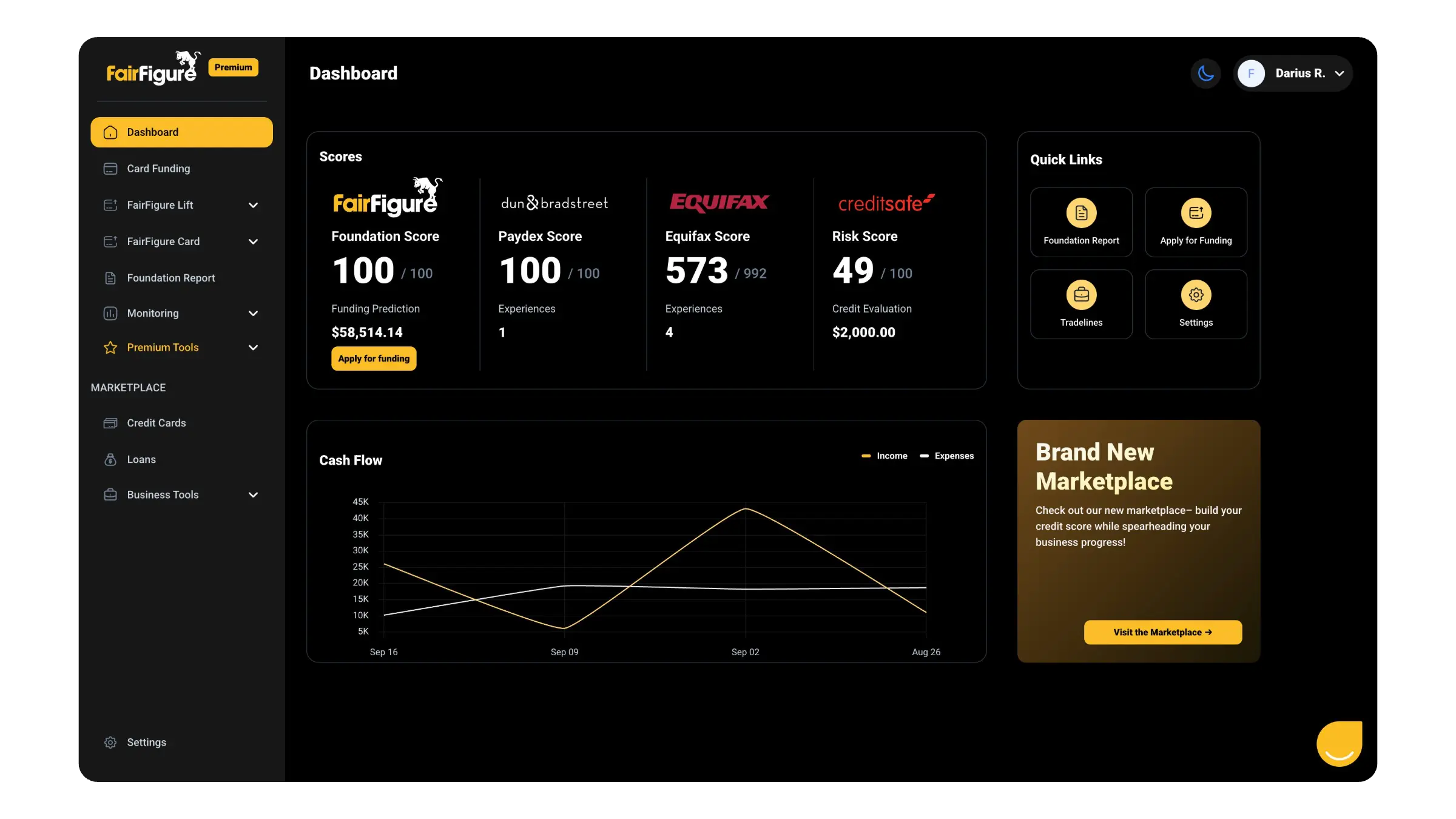
For a more efficient solution, sign up for FairFigure. With the FairFigure Card or FairFigure Lift program, you’ll get two business tradelines for the price of one—including a financial tradeline.
In addition to reporting your activities to Experian, Equifax, Creditsafe, and the Small Business Financial Exchange, we’ll provide free business credit monitoring, plus access to our proprietary Foundation Report and Foundation Score.
More articles
Read More >
May 05, 2026
6 min read
May 05, 2026
7 min read

April 21, 2026
7 min read
Start your credit building journey for your business
Start your credit journey now with FairFigure