Prequalify for Business Credit Card
Author: Dylan Buckley
September 08, 2026
11 min read
TABLE OF CONTENTS
- 1. What Prequalify Actually Means (and How It Differs from Pre-Approval)
- 2. Step 1: The Difference Between a Soft Pull and a Hard Pull
- 3. Step 2: Gather Everything Youll Need Before You Start
- 4. Step 3: Check Your Personal Credit Score and Business Credit Profile
- 5. Step 4: Go To Each Issuers Prequalification Tool
- 6. Capital One Business Card Prequalification
- 7. American Express Business Card Prequalification
- 8. Chase Business Card Prequalification
Start your credit building journey for your business

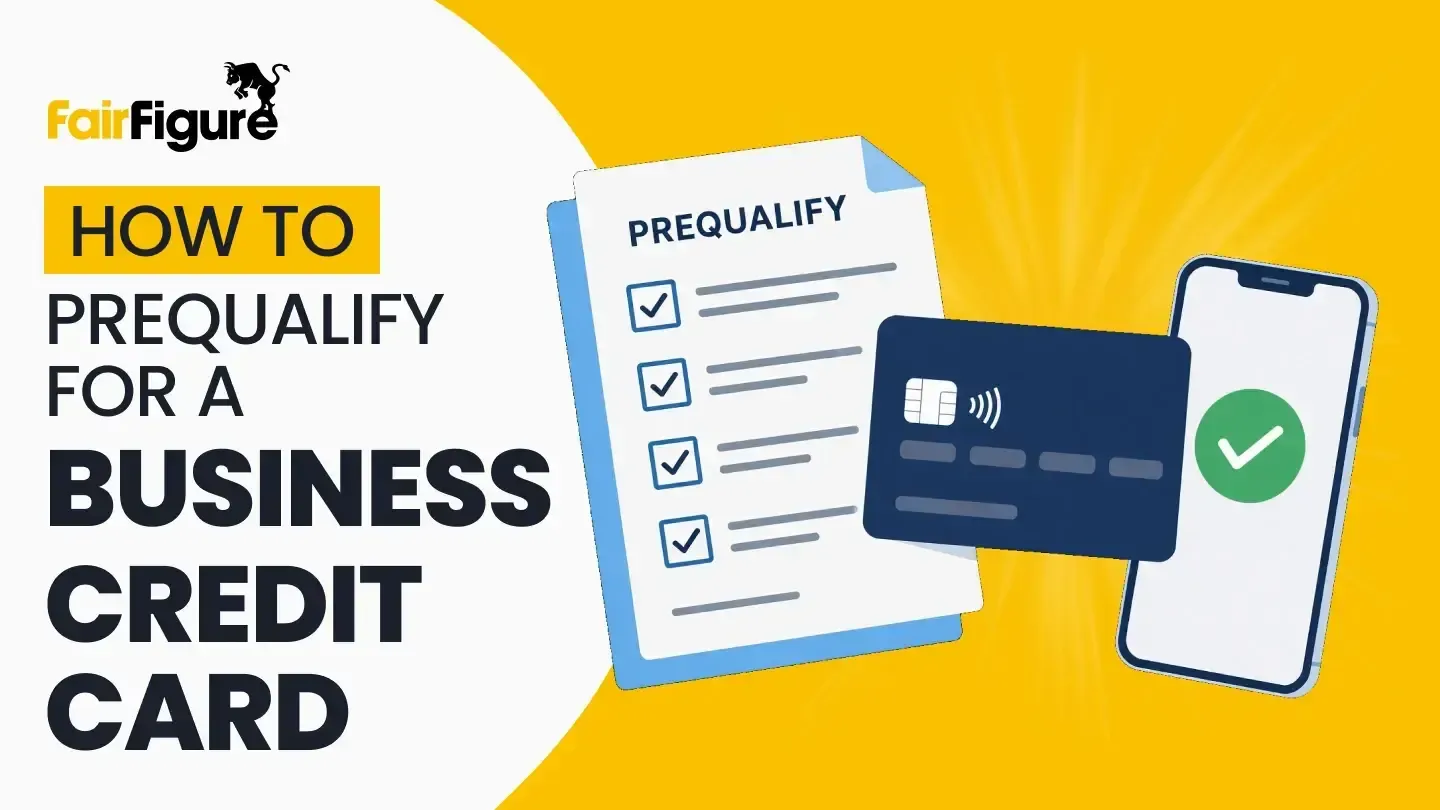
Shopping around for a business credit card requires a fair amount of time and consideration. You can streamline this process by seeing which business credit cards you prequalify for.
We help you better understand what prequalification is, how to prepare to prequalify for a business credit card, and how to make the process as seamless as possible.
Are you looking to prequalify for a business card with no personal credit check, no personal guarantee, and no paperwork?
If you meet the eligibility requirements, you can get a funding offer with the FairFigure Lift Card and accept it with no risk or commitment.
Register for a FairFigure Premium Account. Then, apply for the FairFigure Lift Card to fund your business with ease.
What Prequalify Actually Means (and How It Differs from Pre-Approval)
There’s not always a difference between prequalification and preapproval.
Some business credit card issuers use the terms interchangeably. It might be called a preapproval tool even though it’s actually a prequalification tool.
If they’re not being used interchangeably, the best way to tell the difference is this:
- Preapproval often comes from the issuer. They see that you meet the qualification requirements and send you an offer for a business credit card. You’ve likely seen these in the mail or in your email from personal card issuers.
- Prequalification requires you to fill out information to see if you’re a good candidate for a business card with an issuer. Rather than them reaching out to you, you’re using their prequalification tool to see what the best fit is.
Step 1: The Difference Between a Soft Pull and a Hard Pull
Whether you’re being sent a pre-approved business credit card offer or you’re trying to see if you can pre-qualify for a business credit card, you might be concerned about a personal credit check.
The one thing to pay attention to with these prequalification tools is the language. For example, you’ll find that they’ll say “soft pull.”
There’s a difference between a soft credit pull and a hard credit pull. A soft credit pull is done to check your eligibility. It doesn’t have an impact on your personal credit score or personal credit report.
Once you decide to apply for a business credit card, that’s when a hard pull comes in. Hard pulls are done for small business credit cards and are added to your reports. They’re used to help calculate your scores and reveal financial health.
While hard pulls can affect your personal credit, they should only lower it by a few points. Additionally, they should only impact your credit for a few months. They only become a problem if you have multiple hard pulls in a short period of time.
If you want to get pre-qualified for a business credit card, you only have to worry about soft credit pulls.
Step 2: Gather Everything Youll Need Before You Start
Prequalifying for a business credit card isn’t particularly challenging. However, you will need a few things to get started.
Some of the information that a business credit card issuer will ask for includes:
- Personal information, such as your name, date of birth, and address.
- Your Social Security number and employer identification number.
- The name of your business, as well as related information. For example, how long you’ve been in business, where you’re located, and business structure.
- Annual business revenue (potentially personal financial details as well).
Keep in mind that the prequalification process is often less rigorous than the actual application process. To get approved, you’ll need to provide financial records, have a NAICS code, and produce other documentation and information that credit card issuers demand.
Step 3: Check Your Personal Credit Score and Business Credit Profile
You have to rely on your personal credit for the most part if you want a business credit card offered by a traditional financial institution. There are only a few exceptions to the rule:
- You have such strong business credit and such strong business revenue that your card issuer lets you circumvent the personal credit check and personal guarantee requirements.
- You apply for an EIN only business credit card. These are business credit card alternatives, not traditional business credit cards. Think corporate cards, fleet cards, or even the FairFigure Lift Card.
Take some time to look at your personal credit and see where your score lies. You can easily request reports for free from credit bureaus. You can also use your existing financial tools (third-party or a banking app, for example) to check your personal credit.
Most business credit cards will require a good credit score. Business owners ideally need a personal credit score of 670 or higher. However, some business credit cards may accept fair credit. The Capital One Spark 1% Classic Business Credit Card is an excellent example.
The better your credit score, the better your credit limit. A higher score will help you secure lower interest and more funding to give you a cash flow infusion for essential business expenses.
Business credit scores and credit history matter too. The goal of building business credit is to avoid having to leverage personal credit for business credit cards, loans, and other sources of funding.
If you haven’t already, now’s the time to:
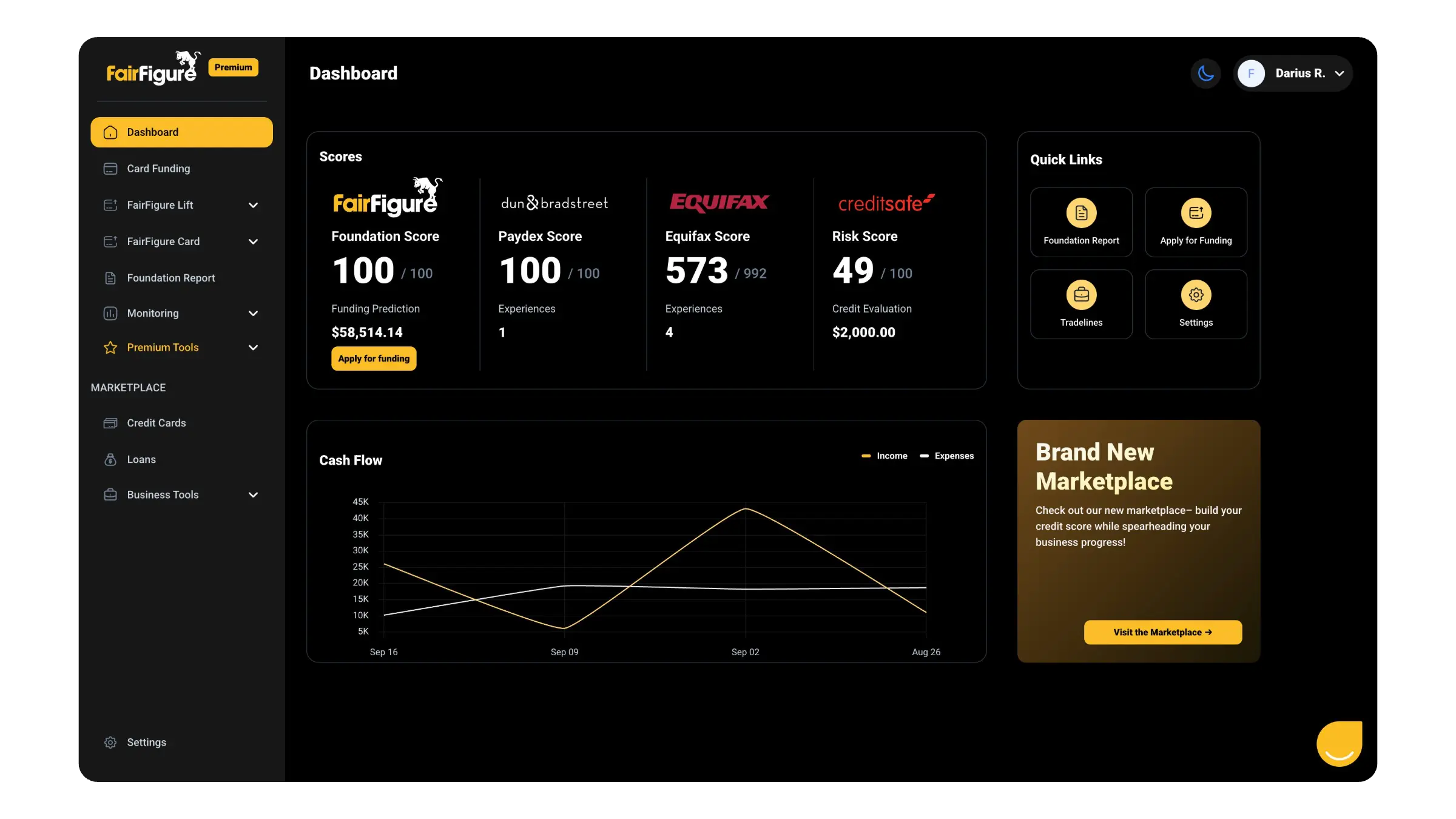
- Sign up for FairFigure. We’ll help you track your scores and reports across credit bureaus like Dun & Bradstreet, Equifax, and Creditsafe. We also have our Foundation Report to help you understand your fundability.
- Get your DUNS number. A DUNS number is an important first step in building business credit. You can get it for free in four easy steps.
- Make on-time or early payments, fund your business strategically (taking care not to overextend yourself or overutilize available credit), and keep track of your business credit reports across credit bureaus so you can report any errors if they appear.
Step 4: Go To Each Issuers Prequalification Tool
Capital One Business Card Prequalification
The Capital One business credit card prequalification tool is designed to help you find the right card.
This is called a pre-approval page, but it’s very much pre-qualification.
Capital One gives you all of your options at a glance.
This helps you see what the perks of each card are, what purchase rates and fees you can expect, and any current offers or bonuses you can take advantage of. For example, you may be able to get a statement credit upon account opening.
They’ll ask you questions about what you’re looking for in business credit cards. This should help you get matched with the right card for your business needs.
It’s worth taking a look at their Small Business Credit Card page as well. Most small business credit cards from Capital One require excellent credit. If you don’t have excellent credit, you may want to consider other options.
American Express Business Card Prequalification
AMEX offers a feature for business owners called Apply With Confidence.
Rather than requiring you to apply for business credit cards without knowing whether you’re a good fit, the Apply With Confidence feature will conduct a soft credit pull when you first apply.
If you’re a good candidate, the tool will let you know. You can then proceed with your application and apply for the card.
If you’re not a good candidate, you’ll be able to avoid the full application process and a hard credit pull.
You’ll also avoid multiple hard pulls at once. This could signal to card issuers and lenders potential financial problems.
Chase Business Card Prequalification
Chase is one of the traditional financial institutions on this list that doesn’t have a business credit card prequalification tool.
But they do have a personal credit card prequalification tool.
With Chase, business owners either need to wait for preapproved offers or use a third-party tool.
Bank of America Business Card Prequalification
Bank of America does have a prequalification tool on their website.
The problem is that it doesn’t state whether it’s for personal use or if it recommends business credit cards as well. It features a two-step process that lets the tool get to know you before making card recommendations.
You can either log in to get personalized card offers or use the tool without logging in. Bank of America may also send you preapproved offers with or without being a customer.
Step 5: Use A Multi-Issuer Tool To Compare Offers In One Place
Checking whether you’re pre-qualified across every major business credit card issuer is a time-consuming task.
The best way to go about it as a small business owner is to use a multi-issuer tool.
Multi-issuer tools give you the ability to see if you’re pre-qualified for business credit cards across the board. This helps you see offers you might not have known about or considered.
You’ll be providing the same information as you would if you were using an issuer’s prequalification tools. Then, the tool will match you with cards you’re most likely to get approved for.
Step 6: What To Do If You Dont Qualify Through Traditional Prequalification
You might not qualify for every business credit card on the market. This is especially true if you have bad credit or if you’re a new business with no or limited credit history.
So, what are your options in this scenario?
- Look at Alternatives: Traditional business credit cards might not be an option at this point in time. Consider a fleet card, a corporate credit card, or other business credit cards with no personal credit check that is easy to qualify for.
- Consider Secured Business Credit Cards: Secured business credit cards aren’t something we recommend. However, a secured card can help you start building credit and funding your business. You’ll just have to forego a higher credit limit and good terms.
- Research Other Funding Opportunities: See how else you can fund your business until you have the credit and revenue needed for a business credit card. Just be careful to avoid predatory interest rates and other downsides of easy financing.
Step 7: Submit Your Full Application For The Card You Choose
If you find a business credit card that’s a good match for you, you can submit your full application.
As stated above, business credit card applications will require a bit more detail from you. Make sure you have all the necessary financial documentation and information that your credit card issuer will ask you for.
If you experience any problems along the way, you can reach out to the credit card issuer directly to walk you through the application process. If they have physical branches, you can just visit them instead and have an employee help you apply for a card.
Step 8: What Happens After You Apply
After you apply for a business credit card, the card issuer will review the information you’ve provided and conduct a hard credit pull.
It’s important to remember that prequalification doesn’t guarantee automatic approval. It’s simply a way to know if there’s a good chance you’ll be approved for a card.
If the card issuer determines you’re a good fit for a card, they’ll then send you an approval or a denial, with the former featuring all the details of your new card (credit limit, interest, etc.). Your denial will explain why you were denied (limited personal credit history, low revenue, etc.).
The credit card issuer will then ship out your card. As soon as you get it, all you have to do is activate it to start using it. Some issuers even have virtual cards that you can start using right away once you’re approved.
Prequalifying for business credit cards can be challenging. With FairFigure Lift, all you need to access a card with revenue-based funding is $2,500 a month in revenue and three months in business. You don’t have to worry about a personal credit check or personal guarantee.
You also get two tradelines that report to each major business credit bureau: Equifax, Experian, Creditsafe, and the SBFE.
Build credit and fund your business with the FairFigure Lift Card today!
More articles
Read More >
October 08, 2026
15 min read
October 08, 2026
12 min read
October 08, 2026
13 min read
Start your credit building journey for your business
Start your credit journey now with FairFigure