The Annual Business Revenue Needed for a Credit Card
Author: Nick Mann
January 09, 2026
6 min read
TABLE OF CONTENTS

Start your credit building journey for your business

A business credit card is one of the most tried-and-true ways to generate critical cash flow while simultaneously building business credit.
But the question for many business owners is, “How much annual business revenue do you need for a credit card?”
Below, you’ll find concrete numbers on the total revenue needed, what to expect from a credit card application, and options for securing the cash flow you need.
What Annual Business Revenue is Needed to Qualify for a Credit Card?
First, know that there isn’t an official number that credit card companies rigorously use when determining eligibility. There are numerous factors involved in the decision-making process, so you can’t apply a single business income number across the board.
That said, most experts agree that $25,000 of annual revenue is typically the minimum needed for most established businesses when applying with a card issuer.
According to Tech Times, “For established businesses, a minimum annual revenue of $25,000 to $100,000 is often considered acceptable, depending on the card.”
However, a credit card issuer may be less stringent for new startups.
Some of these companies could have as little as $5,000 to $10,000 in annual revenue and still have a realistic chance of getting approved, especially if the new business owner has a strong personal credit score, a history of responsibly using a personal card, or collateral.
And in the case of a high-limit corporate card, the minimum annual revenue will be much higher.
In fact, Brex writes that “companies will typically need to have annual revenue of $4 million, a minimum of $250,000 in annual expenses, and at least 15 authorized cardholders to be approved.” So, as you can see, a company’s specific circumstances impact how much annual revenue is needed for approval on a credit card application.
But at the end of the day, there’s no strict number in place, and what’s important is proving to lenders that you’re capable of generating enough net revenue to pay back what you borrow comfortably.
How Much Revenue Do You Need for a Business Credit Card?
Again, most credit card companies don’t have a universal net income requirement. However, in most cases, you’ll want to earn somewhere between $25,000 and $50,000 each year to qualify for most business credit cards.
The main exception would be if you’re looking for a high-rewards, high-credit-limit business credit card. In that case, you would likely need to earn more, with $100,000 of gross revenue being a good number to shoot for.
Just note that your annual revenue heavily affects your credit line size.
Say, for instance, your company currently has $25,000 in annual revenue. You would likely have a maximum credit limit of around $5,000.
But if you earned significantly more revenue of $1 million annually, your limit could be as high as $50,000 or more.
The point here is that you can have a fairly small annual revenue and still qualify for a business credit card. It’s just that you won’t have nearly the same credit limit as you would if you had a much higher annual business revenue, and you may encounter higher fees.
But with growth in your annual recurring revenue and sustained business credit building through a business card, that limit amount should increase over time.
Can You Get a Business Credit Card with No Revenue?
The short answer is yes. Getting a business credit card is possible with no income. However, there are only a couple of scenarios where this would be a realistic option.
The most common would be if you are classified as a startup, sole proprietor, or freelancer.
As long as you fall under one of these categories and have a strong personal credit score — ideally with a score of 700 or above, and personal income outside of business operations — there’s a reasonable chance that you’ll qualify for a business card without any income.
The key is to have a history of consistently making personal credit card payments on time, a high personal credit score, and a well-established credit history.
Besides that, most credit card issuers will want to have a concrete overview of what your business revenue projection will be. Also, they may ask for details like your business plan, business expenses, and personal income on your business credit card application.
Just note that, if approved, you’ll likely have a smaller limit initially, as well as higher interest charges and additional fees. But as you prove yourself as a responsible borrower, you could potentially get a higher credit limit and have your fees reduced over time.
Also, you could use the momentum you gain to apply for a better small business credit card like the American Express Business Platinum Card.
For more information on cards with generous eligibility criteria, even with bad credit and minimal personal income, check out these resources:
Revenue-Based Business Credit Cards: An Alternative Approach
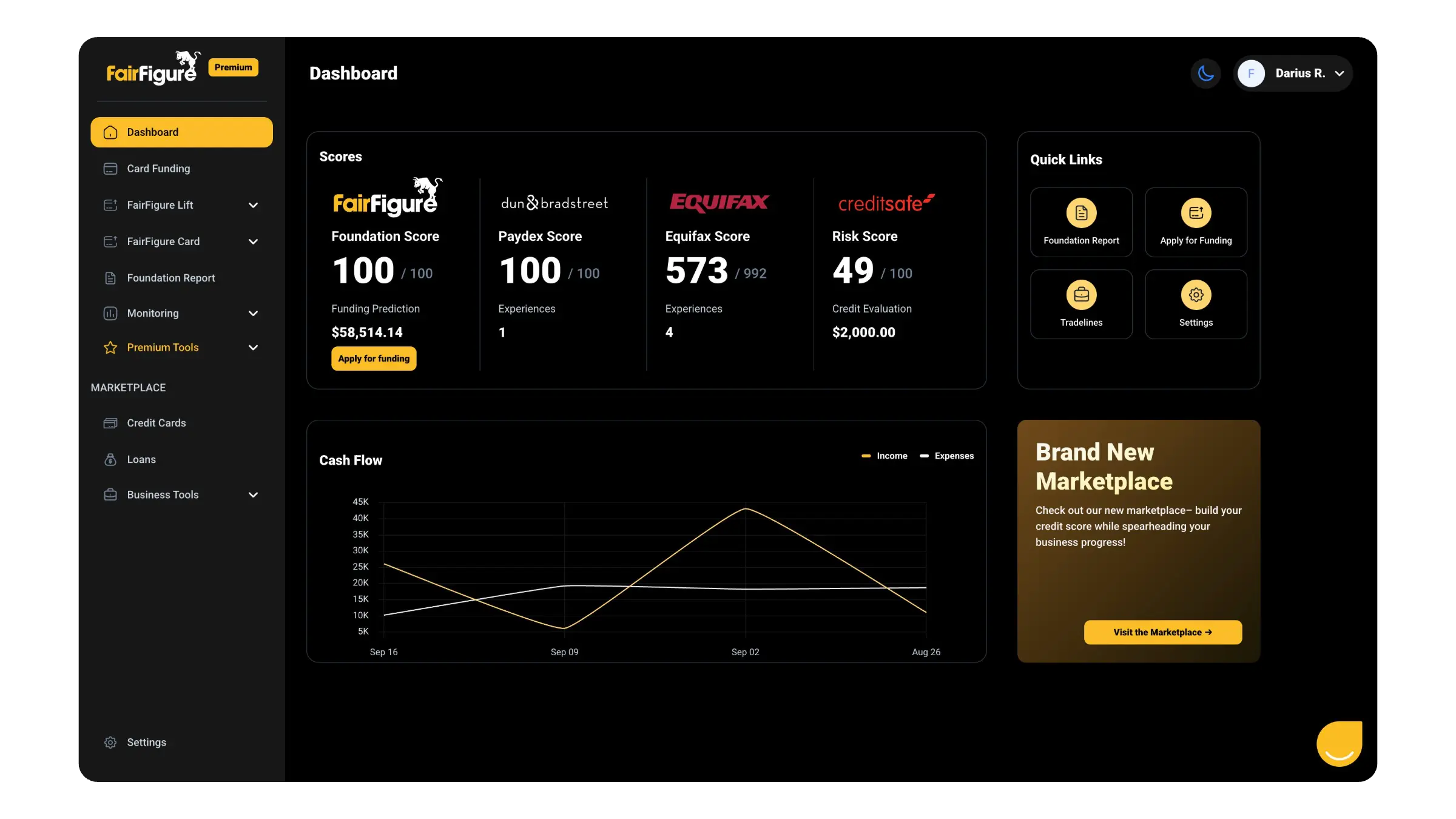
If you’re in a situation where you’d rather not rely heavily on personal credit but have solid business income, revenue based business credit cards, like the FairFigure Capital Card and Revenued Business Card, can be a great option for generating cash flow.
With this type of business card, a lender evaluates your company’s eligibility and bases your spending limit on your business revenue instead of personal credit. It offers a few key benefits.
First, you don’t need to generate huge business revenue to qualify. With the FairFigure Capital Card, for example, you can qualify with as little as $2,500 in monthly income.
Next, you don’t need to have been in business for long. In fact, you can be operating for as few as three months and potentially qualify with FairFigure.
Third, your limit can increase over time. So, as you make bigger and more consistent income deposits, you should have access to more credit.
And with the FairFigure Capital Card, there’s no personal guarantee, no personal credit check, no annual fee, no excessive expenses, and no lengthy paperwork to deal with.
Closing Thoughts
It’s always helpful to generate robust annual revenue when applying for a business credit card. That said, you don’t need to have a million-dollar business to be eligible.
In fact, you can potentially qualify with as little as zero business revenue. It just boils down to applying with the right credit card company and having the right expectations of what your initial limit will be.
More articles
Read More >
September 15, 2026
12 min read

September 10, 2026
7 min read

September 10, 2026
8 min read
Start your credit building journey for your business
Start your credit journey now with FairFigure