The 13 Best Fintech Business Credit Cards 2026
Author: Dylan Buckley
August 10, 2026
17 min read
TABLE OF CONTENTS
Start your credit building journey for your business

Traditional business credit cards can be difficult to qualify for as a new small business owner. You might have a poor personal credit score and a credit history that holds you back from funding.
That’s where fintech companies come in.
These business credit cards are designed specifically for business owners like yourself. We’ve come up with a list of the top 13 fintech business credit cards that you can use to fund your business.
Best Fintech Business Credit Cards Compared
| Card | Features/Benefits | Costs/Eligibility Requirements |
|---|---|---|
| FairFigure Lift Card | Flexible payback terms, two reported tradelines, EIN-only. | $35/month for FairFigure Premium, at least $2,500 a month and three months in business to be eligible. |
| BILL Spend & Expense Card | No annual or per-card fees, flexible underwriting and rewards, built-in spend controls. | Minimum cash balance of $20,000. |
| Revenued Business Card | Easy application, helps you build business credit. | At least six months in business and at least $10,000 in monthly deposits. |
| Brex Corporate Card | Up to 7x points, no PG, credit building support. | At least $50,000 in the bank or VC backing. |
| Ramp Corporate Card | Up to 5% savings plus partner offers, no annual or per card fees, reports to business credit bureaus. | At least $25,000 in a U.S. business bank account. |
| Mercury IO Card | Unlimited 1.5% cash back, unlock monthly terms as you scale, no fees. | Must have a Mercury account. |
| Rho Corporate Card | Up to 1.5% cash back, vendor-specific cards, no fees. | A minimum cash balance of $75,000 for monthly terms. |
| Aspire Card | No minimum cash balance, unlimited 1.5% cash back. | Basic business documentation (proof of business, identification, etc.) |
| Wise Business Card | Reduced costs on international transactions, instant virtual cards you can distribute globally. | One-time account setup fee, $5 per card fee. |
| Airwallex Corporate Card | No foreign transaction fees, conversions at the interbank rate, 2% cash back on all purchases. | Must have an Airwallex account to qualify. |
| Relay | Up to 1.5% cash back on every purchase, no annual fees, no personal credit check. | Must be invited to apply, at least one year in business and $50,000 in monthly revenue OR six months in business, $20,000 in monthly revenue, and a minimum balance of $25,000 in Relay. |
| Capital on Tap Business Credit Card | Credit limits of up to $50,000, 1.5% cash back on all purchases, no annual or foreign exchange fees. | Variable APR of 16.74% to 86.24%. |
| Navan Corporate Card | Up to 1.5% back, no annual card fees, global coverage. | Need a Navan account. |
- FairFigure Lift Card
- BILL Spend & Expense (Formerly Divvy)
- Revenued Business Card
- Brex Corporate Card
- Ramp Corporate Card
- Mercury IO Card
- Rho Corporate Card
- Aspire Card
- Wise Business Card
- Airwallex Corporate Card
- Relay
- Capital on Tap Business Credit Card
- Navan (formerly TripActions) Corporate Card
Best Fintech Business Credit Cards Compared
1. FairFigure Lift Card
The FairFigure Lift Card isn’t a business credit card. However, it is a fintech business card that can get you funded when other business credit cards are turning you away.
The FairFigure Lift Card offers you revenue-based financing. So long as you have at least three months in business and are generating at least $2,500 a month, you can get approved.
The FairFigure Lift Card comes with great perks. These include:
- Two Reported Tradelines: Your $35/month Premium FairFigure subscription is the first tradeline. Your card is your second. Both are reported to Equifax, Experian, the SBFE, and Creditsafe to build your credit history.
- No PG, Personal Credit Check, or Paperwork: Other business credit cards consider your personal credit. With the FairFigure Lift Card, there’s no personal guarantee, no personal credit check, and no paperwork.
- Flexible Repayment: You determine when to pay your balance in full. Choose between four-week or eight-week payback terms.
- Cash Back: Using your FairFigure Lift Card on eligible vendors will help you save some money in your business.
- No Security Deposit Necessary: This isn’t a secured business credit card. You don’t have to pay because of your bad personal credit. It’s a true EIN-only card with no security deposit required.
2. BILL Spend & Expense (Formerly Divvy)
Many of the big fintech credit cards on the market are integrated into greater financial solution ecosystems. One great example of this is the BILL Spend & Expense card, also known as the BILL Divvy Card.
The BILL Spend & Expense card is one of the easier corporate cards to qualify for. Because you don’t have the traditional eligibility requirements of a business credit card, corporate cards often require you to have a minimum cash balance.
The BILL Spend & Expense card requires you to have a minimum cash balance of $20,000 in a business bank account.
You can expect a credit limit of anywhere from $1,000 to $5 million.
Some other benefits of this card include:
- No annual or per-card fees.
- Flexible underwriting and cash rewards that give you a card designed for your small business.
- Integrated with the BILL Spend & Expense platform. You receive a fintech card that will make it easier to keep track of all of your spending and business expenses.
- Tight spend controls.
- Helps you build business credit by reporting card activity to the SBFE.
It’s a solid business credit card to consider if you need funding for your business and already use the BILL Spend & Expense software.
3. Revenued Business Card
Aptly named, the Revenued Business Card is a revenue-based business card that consists of two parts: the Revenued card and the Flex Line.
The Flex Line is what funds your Revenued card. It works like this: they purchase a portion of your future receivables; you access it when you use your card, then you pay it back to get your full credit limit.
As with many of the fintech business credit card solutions here, Revenued may not be for everyone. You need at least six months in business and at least $10,000 in monthly deposits.
They boast a quick and easy application process; it takes as little as an hour to get an answer back about your application and as little as 24 hours to get funded.
This fintech business credit card can help you build credit. However, they don’t list which business credit bureaus they report to. It’s also one of the EIN only business credit cards for startups with no credit in this guide.
The one thing to be aware of is the fact that there are factor rates with the financing you receive from Revenued. They state that they have lower factor rates than merchant cash advances. As with other elements of their card solution, they don’t spell out exactly what you’ll be charged.
You also don’t get cash rewards with this card.
4. Brex Corporate Card
When hunting for a business credit card, certain features may be a must for your small business. For example, let’s imagine you want business credit cards with robust rewards. In this case, you might want to seriously consider the Brex Corporate Card.
Recently acquired by Capital One, this corporate credit card offers a tiered points reward system. Breaking the up to 7x points, you can expect:
- 7x points on rideshare transactions.
- 4x points on Brex travel (flights and prepaid hotels)
- 3x points on restaurants.
- 2x points on software purchases.
- 1x points on everything else, with unlimited points and no blackouts.
- Plus, up to $350,000 in partner offers.
There’s a lot more to like about this card, though. You receive a corporate credit card with:
- Real-time expense management, spend control, and card management.
- No personal credit check or personal guarantee required.
- Credit-building support. Brex reports to Dun & Bradstreet, Experian, and Equifax.
- Dedicated cards for specific business expenses.
With all that in mind, Brex’s eligibility requirements may be high for the average small business owner. They generally require at least $50,000 in the bank or VC backing. This could be a fintech business credit card you qualify for after you’ve established yourself.
5. Ramp Corporate Card
The Ramp Corporate Card is a strong contender if you’re interested in both the card itself as well as their expense management and financial solutions.
This card is easier to qualify for than some of the other corporate credit cards listed here. If you need a card you can get earlier in your business, the Ramp Card may be a good fit for your business.
Speaking to the card itself, the Ramp Corporate Card offers:
- No monthly fees or per-user fees.
- Preset controls to prevent out-of-policy spend. These include controls at the merchant, category, and vendor levels.
- Unlimited free employee cards, both virtual and physical.
- No personal credit check or personal guarantee.
- Up to 5% savings, plus an additional (up to) $350,000 in savings via partner offers.
To be eligible for the Ramp Corporate Card, you need at least $25,000 in a U.S. business bank account.
Better yet, this business card can also help you build credit. They report card activity to Dun & Bradstreet every month.
6. Mercury IO Card
The Mercury IO Card is the right choice for those who want their banking and card under one roof.
Card access is dependent on banking approval through Mercury. This deviates a bit from some of the stringent qualifications we’ve seen so far. It makes it easier to access, especially for non-resident founders with a foreign passport and an EIN.
There’s a lot to like about this card aside from this, such as:
- Cash Back on All Purchases: You receive unlimited 1.5% cash back on all spend with the Mercury IO Card. You can start spending right away with a virtual card.
- Rewards for Scaling: At first, the Mercury IO Card is a daily charge card. Once you reach a $15,000 balance, you receive monthly repayment terms and unlock a higher credit limit.
- Help Building Business Credit History and Scores: Mercury reports card activity to Dun & Bradstreet, Equifax, and Experian.
- Expense Management Tools: Mercury IO cards come with expense management tools such as spend control features, merchant-specific card locks, company-wide spend policies, and more.
- No Impact on Your Personal Credit: There’s no personal credit check or personal guarantee with the Mercury IO Card. It’s perfect if you want to get a business credit card with only an EIN.
- No Fees: There are no interest or annual fees cutting into your bottom line.
It’s a great card that rewards your hard work as a small business owner.
7. Rho Corporate Card
The Rho Corporate Card is good for both established businesses with strong revenue as well as newer businesses.
If you already use Rho’s financial and expense management solutions, it may make sense to spring for their business card.
It’s important to know upfront that you have two options: daily charge cards and monthly charge cards. Daily charge cards are the easiest to qualify for if you’re a new small business. You get the full 1.5% cash back that they offer with daily repayment.
Monthly cards come with the benefit of getting to pay your card’s balance off in 30 days. However, this comes at the cost of a cash rewards reduction. You get 1% cash back instead. You’ll also need a minimum cash balance of $75,000 to qualify.
Thankfully, it’s a business credit card requiring no personal credit check. Only your financials will matter when they’re making a decision.
No matter which repayment terms you choose, you receive:
- Vendor-specific employee cards. Track spend activity easily by using cards designed for specific business expenses.
- The ability to set daily, weekly, or monthly limits.
- Strong spend controls, allowing you to cancel cards in one click and manage ownership on the go.
- No platform fees, subscription fees, or per-card fees.
- Support building business credit (not specified by Rho).
Everyone starts with a daily repayment charge card. You can apply for a monthly charge card after you’ve been approved for the daily corporate credit card.
8. Aspire Card
Unsecured business credit cards are always ideal. It’s generally not desirable to have a secured business credit card. However, the Aspire Card is one of the few exceptions. You’re getting a fintech business card rather than a traditional credit card.
The Aspire Card is the best business credit card if you want a secured solution.
Aspire stands out because it doesn’t have a minimum bank balance or a minimum security deposit. It’s usable from day one of a new entity, including Delaware C-corps and Wyoming LLCs. It also doesn’t require a personal credit check.
It combines your banking, cards, bill pay, expense management, and treasury in one platform.
As with many other fintech business credit cards, you get 1.5% unlimited cash back, virtual and physical cards for your employees, and spend limits that help you manage your cards at any time.
This card doesn’t appear to report to business credit bureaus. If you need a card that helps you build your business credit, you might opt for other business credit cards on this list.
9. Wise Business Card
Wise is a company that is well-known for facilitating international transactions, making it easier and less expensive for business owners. Now, you can take advantage of the Wise Business Card to save on international spend.
The Wise Business Card is perfect for businesses with cross-border teams or employees across the globe. No longer will you have to deal with hefty fees that the average business credit card makes you pay.
With the Wise Business Card, you receive:
- Reduced costs on international transactions.
- Instant access to virtual employee cards that are controlled by you and used by your team, no matter where they are.
- Instant spending notifications.
- Strong spend controls.
These aren’t traditional cards or corporate charge cards. The Wise Business Card is a debit card. You will be using the available funds you have in your Wise Business account rather than drawing from a credit line.
There are a few fees with the Wise Business Card. The first is the one-time account setup fee (the free account won’t cover business activity). The second is the $5 per card fee as you add team members.
There are no subscription fees, so despite this costing money, it’s not outrageously expensive.
10. Airwallex Corporate Card
Are you looking for another card similar to Wise, but maybe with a few perks? Another cross-border-focused card similar to Ramp or Brex for global multi-entity businesses is the Airwallex Corporate Card.
The Airwallex Corporate Card is a corporate card designed for local and global spend. You can spend in over 60 markets, all without foreign transaction fees and conversions at the interbank rate.
It only takes minutes to get set up with this card, so you don’t have to deal with the hassle of waiting for approval.
Some other highlights of the Airwallex Corporate Card include:
- No personal credit check or personal guarantee required.
- 2% cash back on all purchases. No caps or tiers.
- Instant virtual cards so you can get your team what they need no matter where they are.
- Spend controls, shared cards, and real-time activity tracking.
- Instant spend notifications and fraud alerts.
The Airwallex Corporate Card isn’t the same as other corporate cards on this list. As with Wise, this is a debit card connected to your business account.
11. Relay
Relay is a business banking platform built around multi-account cash bucketing, offering the Relay business credit card tied to that structure.
We’ll preface this section with two notes. The first is that Relay offers two cards: the Relay Debit Card and the Relay Credit Card. While anyone can get the Relay Debit Card, the Relay Credit Card is invitation-only.
If you are invited to apply, here’s what you can expect:
- Up to 1.5% cash back on every purchase.
- A 30-day billing cycle.
- No annual fees.
- Customized business credit cards for every employee, spend category, project, and vendor.
- One platform that helps you track all of your financials.
- Easy-to-manage spend controls and real-time tracking.
- No personal credit check. Plus, they report activity to Experian, Equifax, and Dun & Bradstreet to help you build your business credit score.
Knowing the eligibility requirements can help you get your invitation faster. The standard eligibility requirements are as follows:
- You must be a U.S.-incorporated and operated business.
- You must have an LLC, partnership, or corporation.
- You must have at least one year in business before the time of your application.
- You must earn at least $50,000 in monthly revenue.
Meanwhile, there are also cash eligibility requirements. They have similar requirements, except you’ll need only six months in business, $20,000 in monthly revenue, and you must maintain a minimum balance of $25,000 in Relay.
12. Capital on Tap Business Credit Card
The Capital on Tap Business Credit Card is built to support the needs of the average small business owner.
It’s considered easier to qualify for than traditional bank business credit cards. If you need funding with perks designed for you, it’s a solid choice.
The Capital on Tap Business Credit Card comes with:
- Credit limits of up to $50,000 (based on creditworthiness).
- 1.5% cash back on all purchases. You can bump this number up to 2% by activating weekly autopay.
- Free employee card with built-in spend controls.
- No annual or foreign transaction fees.
- Real-time spend tracking and auto-syncing to Xero and QuickBooks.
Now, there are a few downsides. Variable APR on this card ranges from 16.74% to 86.24%. Only those with excellent credit get the lowest rates. If your personal credit score is poor, you might be better off with some of the EIN-only cards on this list.
That being said, this card does help you build business credit. They don’t state which business credit bureaus they report to, but they do report.
13. Navan (formerly TripActions) Corporate Card
The Navan Corporate Card is offered alongside Navan’s Travel and Expense solutions.
While you can use Navan Connect to keep your eligible current card solutions, the Navan Corporate Card offers:
- Up to 1.5% back on every Navan corporate card transaction.
- No annual card fees.
- Global coverage, covering the whole team with cards issued in GBP, USD, and EUR.
- Physical cards for everyday spending or on-demand virtual cards for travel bookings made through Navan.
- Automatic approvals for routine transactions.
Navan doesn’t require a personal credit check and states that they can get you 10-20x higher credit limits than traditional small business credit cards. There’s no information as to whether they report to business credit bureaus.
When you need a business credit card for your business, there are ample fintech business credit cards to choose from. Consider the FairFigure Lift Card or other alternatives listed above to help you fund your business with ease.
More articles
Read More >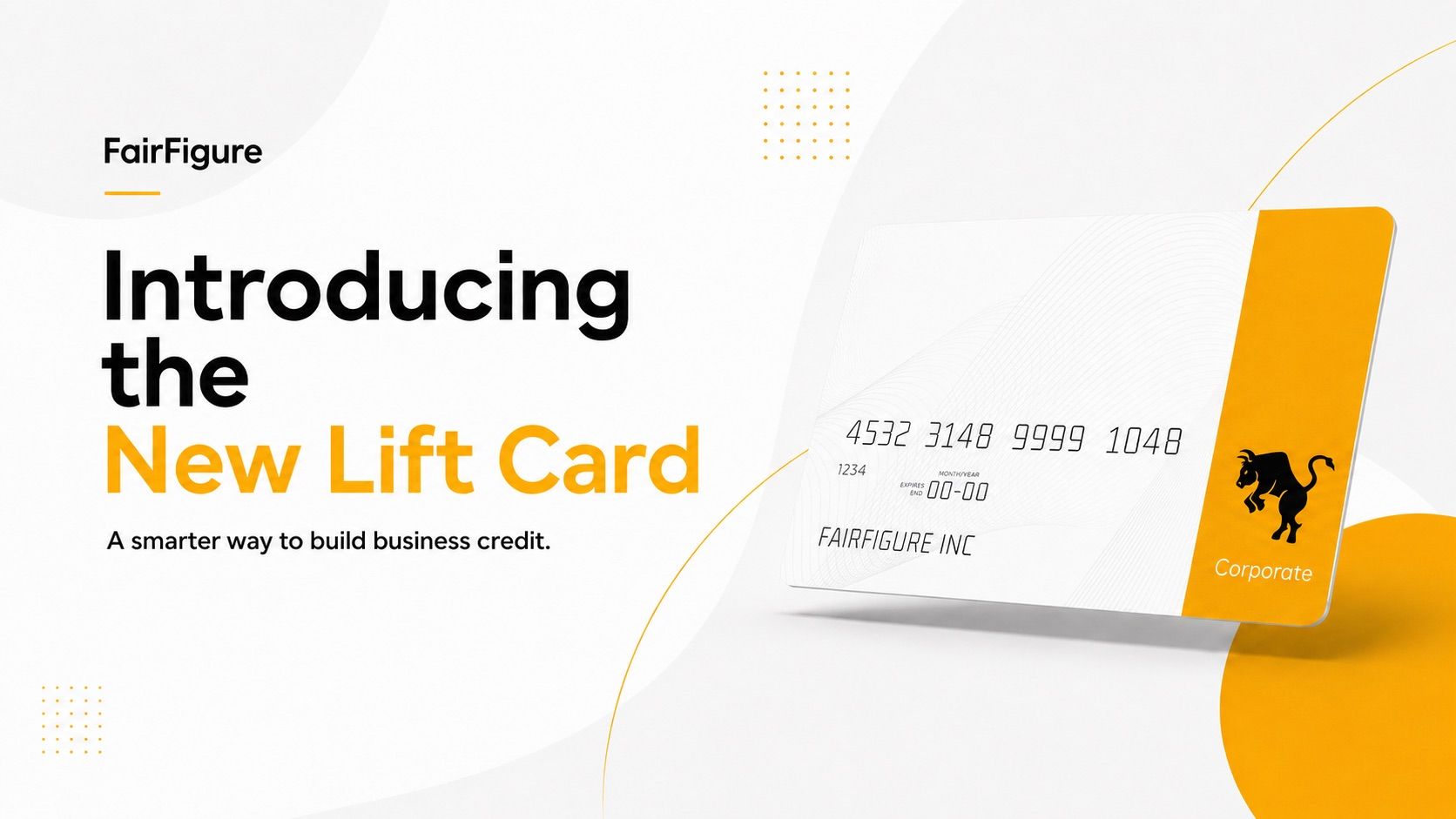
September 17, 2026
2 min read
September 17, 2026
11 min read
September 17, 2026
5 min read
Start your credit building journey for your business
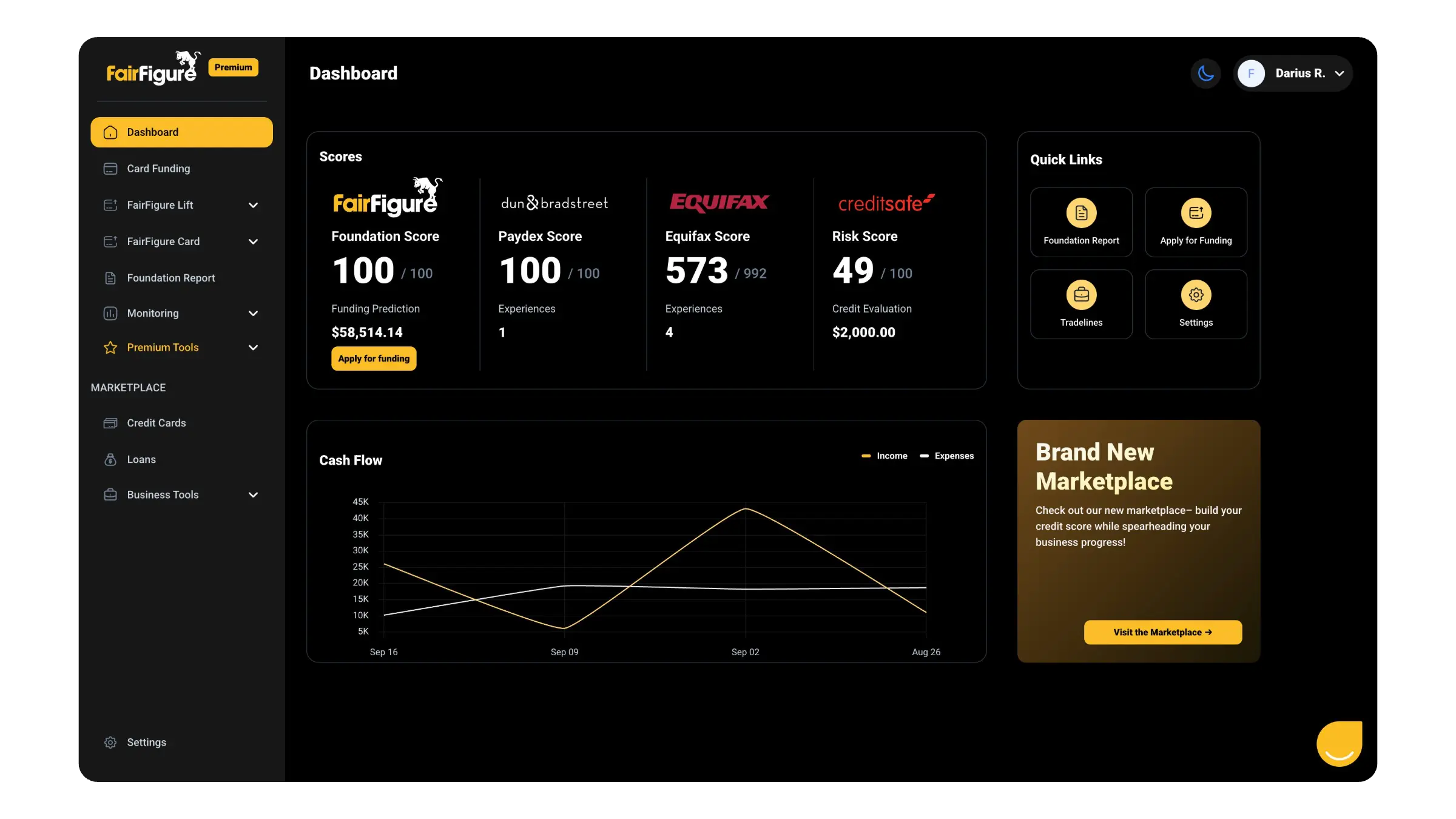
Start your credit journey now with FairFigure