The Four Tiers of Business Credit and Financing
Author: Nick Alex Gallo
January 23, 2026
8 min read
TABLE OF CONTENTS

Start your credit building journey for your business

I'm your trusted business funding advisor, here to guide you through the maze of securing capital. It's a crucial and challenging task, but together, we can navigate it successfully. Let's get started!
The Art of Digging Your Financial Well
Funding your business is akin to digging a well. There are several layers to consider:
- Personal Assets: Common, but not my favorite. It's risky, akin to gambling with your own resources.
- The Three F's: Friends, Family, and the brave-hearted. A popular choice, though it can be complicated.
- Credit, Loans, and Investors: These deeper options get real. Waiting too long to explore them can leave you in a drought.
Different types of capital come with their own nuances. Consider the following:
- Debt vs. Equity: A choice between loans or sharing a piece of your venture.
- Control: Each dollar might affect your autonomy.
- Security: Assess what's at stake.
- Transferability: Is the capital for your immediate use or the future of your business?
- Ease of Attainment: Some funds are harder to secure than others.
Start by incorporating your business (S-Corp, C-Corp, LLC). Building a business credit profile enhances credibility and opens doors to better financing.
Navigating the Four Tiers of Financing
Tier 1: Basic Trade Credit

Tier 1 financing is the most accessible type of business credit. It typically refers to trade credit accounts, which are revolving tradelines from vendors that primarily offer products or services other than financing. An office supply company would be a good example.
These accounts usually don’t require a business credit check. Instead, you can often qualify for them with your personal credit score or no credit at all. However, you may have to sign a personal guarantee, which gives your credit issuer the right to pursue you personally for your business debt.
Because trade credit accounts are easier to qualify for than other forms of commercial financing, most small business owners use them to start building business credit.
Once you have several with a positive payment history, you can move on to higher business credit tiers and more attractive accounts.
Most tier 1 trade credit accounts grant you net 30 payment terms. That means you have 30 days from the date you make your purchase to pay off your outstanding balance. During that credit term, interest won’t accrue, much like a business credit card.
If you’re a new small business owner looking to get started with business credit, check out our list of tier 1 business credit vendors for some great options.
The ideal net 30 account is with a vendor that offers something you buy regularly and reports to each major business credit bureau. Those include Dun & Bradstreet, Equifax Business, and Experian Business.
FairFigure and eCredable are great tier 1 business credit vendors to get started with if you want to build business credit fast.
eCredable is a third-party bill reporting service that reports each subscription payment as a tradeline. Your monthly payment is reported to D&B, Experian Business, and Equifax Business. Any eligible bills will be reported to Equifax and Creditsafe.
You can sign up for their Business Lift or Business Lift+ subscription here.
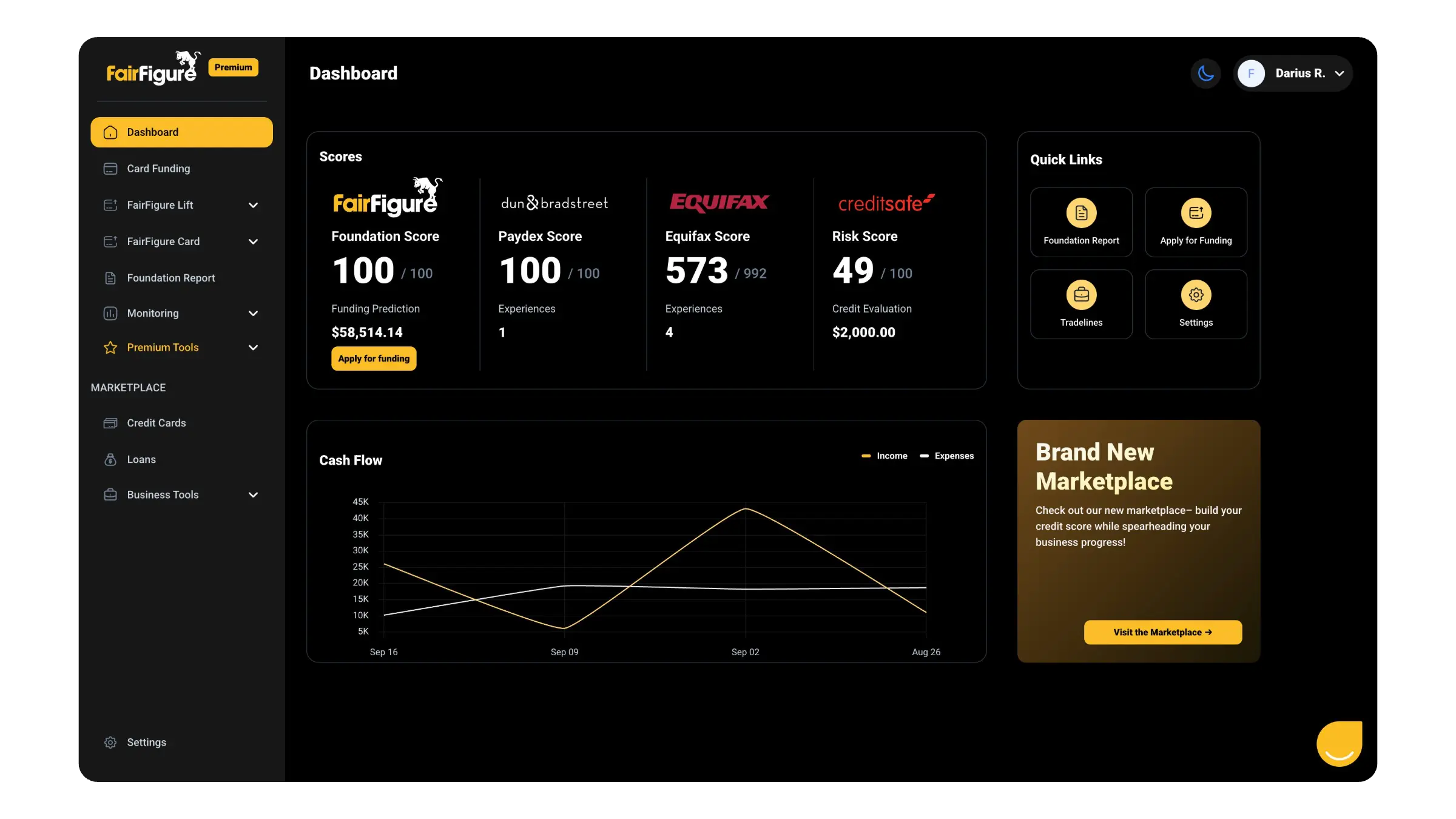
Meanwhile, FairFigure offers a business credit monitoring subscription that gets reported to the SBFE, Creditsafe, and Equifax Commercial. Our service comes with additional perks like business credit corrections to address errors in your business credit report quickly.
Sign up for FairFigure here to see how we can help you build your business credit fast.
Tier 2: Advanced Trade Credit

Advanced trade credit, or tier 2, offers more substantial credit terms than tier 1. It's suitable for larger purchases and requires a solid business credit history.
Welcome to the world of advanced trade credit, also known as tier 2 trade credit. This is the next level in business finance, stepping up from the basic tier 1 trade credit. It's a significant step for a growing business, and a great example of a tier 2 card is the FairFigure Capital Card.
If you're familiar with tier 1 trade credit — the straightforward "pay me in 30 days" deals — then it's time to explore advanced trade credit. This is a step up, akin to moving from a tricycle to a bicycle, offering more substantial credit agreements than tier 1.
Advanced Trade Credit involves a more thorough process compared to Tier 1. Suppliers and vendors will examine your business's credit history more closely before finalizing any agreements, ensuring that your business is financially reliable.
With advanced trade credit, you'll access more credit and have more time to repay. This is because you've already demonstrated trustworthiness and financial responsibility in your business dealings.
Think bigger with advanced trade credit. It's not just for small purchases anymore, but can be used for significant investments like new equipment or technology. The terms are usually more lenient, allowing for bigger dreams and plans.
To qualify for advanced trade credit, your business needs a solid reputation for timely payments and responsible financial management. It's about proving your business's creditworthiness.
Effectively managing advanced trade credit is like laying the groundwork for a prosperous future. It enhances your business's credit story, paving the way for higher-tier financing options such as bank lines of credit or large loans (tier 3), and even opens doors to investment opportunities.
Advanced trade credit is essentially a VIP pass in the corporate credit world for companies that have proven their reliability and financial savvy.
It allows your business to expand and grow, unlocking new and exciting opportunities. Handle this credit wisely, and it will set your business on a path of growth and financial success.
We created this list of tier 2 business credit vendors to make it easier for you to find them.
Tier 3: Bank Lending

When you reach the third credit tier, you leave trade credit behind and enter the world of financial tradelines. In contrast with vendor tradelines, these arrangements come from organizations that specialize in offering financing like banks and credit unions.
To qualify for tier 3 accounts, you should aim to have a solid business credit history with a dozen or so tier 1 and tier 2 trade credit accounts in each business credit report. You should also have a good business credit score and a track record of making timely monthly payments.
In addition to your business credit, tier 3 lenders may want to review your company’s financial statements. Because the stakes are often much higher for them than trade credit issuers, they want to make sure you have the cash flow to pay back whatever you borrow.
While tier 3 credit accounts are significantly more challenging to qualify for than the business tradelines in the previous tiers, they’re usually well worth the effort. They’re the best way to secure large amounts of flexible capital that you can use to grow your business.
For example, you can get a Small Business Administration (SBA) loan for up to $5 million and use the proceeds for a variety of purposes, including acquiring property, improving real estate, or bolstering your working capital.
Tier 4: Investors

Tier 4 business funding is very different from the tiers we’ve discussed previously. It refers to an arrangement in which you raise capital from an investor (such as a venture capitalist or angel investor), rather than a credit arrangement where you borrow from a vendor or traditional lender.
Notably, these investors usually prefer equity financing arrangements, which require you to give up partial ownership of your company. For example, it might involve selling 20% of your corporation’s outstanding shares of common stock.
Equity is generally more expensive than debt in the long run but doesn’t come with fixed monthly payments. As a result, it can be an attractive option for businesses that have already taken on significant amounts of debt and can’t afford to borrow more.
In addition, these investors can bring much more than capital to the table. They’re often experts at scaling the types of companies they invest in and can offer invaluable guidance. They’re also literally invested in your success, so it’s in their best interest to help you as much as possible.
Good business credit scores certainly won’t hurt your chances of convincing these investors to work with you, but it’s usually not their primary concern. They’re typically most interested in startups that have very high growth potential and can provide a lucrative return.
Conclusion
Navigating business funding is more than just finding cash; it's about finding the right kind of cash. With a strategic approach and a bit of savvy, you're on your way to securing the capital your business needs to thrive. Let's get to work!
More articles
Read More >
September 10, 2026
7 min read
September 10, 2026
8 min read
September 10, 2026
11 min read
Start your credit building journey for your business
Start your credit journey now with FairFigure