How Long Does It Take to Build Business Credit with Net 30?
Author: Dylan Buckley
September 17, 2026
11 min read
TABLE OF CONTENTS
- 1. A Realistic Timeline for Building Business Credit with Net 30
- 2. How Many Net 30 Accounts You Need
- 3. Which Net 30 Vendors Actually Report to Credit Bureaus
- 4. How Payment Timing Affects Your Credit Building Speed
- 5. The Role of Credit Utilization in Building Credit Faster
- 6. What Slows Down the Credit Building Process
- 7. When You Can Apply for Larger Financing
- 8. Realistic Expectations vs Marketing Claims
Start your credit building journey for your business

If you find yourself asking, “How long does it take to build business credit with net 30?”, it’s good to know that you can achieve good business credit scores in around three months.
We walk you through what to expect, what type of vendors to target, and strategies for building business credit fast.
A Realistic Timeline for Building Business Credit with Net 30
As mentioned above, you can start building business credit with net 30 in about three months.
However, there are several variables that will affect how long it takes you to see progress.
Building your strong credit profile is dependent upon:
- Your Choice of Net 30 Account: Not every net 30 account will help you build credit. Some don’t report to business credit bureaus. Research net 30 accounts before signing up to avoid using an account that doesn’t yield progress.
- How Many Net 30 Accounts You Have: Certain scores, like the PAYDEX score, require you to have a certain number of tradelines and experiences before a score can be formulated. You’ll need several to get started successfully (we’ll touch on this later).
- Your Approach to Payment: Paying earlier will help you build better business credit than paying on time. You should never fail to make timely payments or early payments. This will lead to poor business credit that you’ll have to work longer to repair.
- Initial Setup and Net 30 Application Processing: From applying for a DUNS Number and EIN to filling out an application for your chosen net 30 accounts, setup and processing can take time, further extending how long it takes you to build credit.
Make sure you have everything planned out and have a firm understanding of net 30 reporting practices to see results as soon as possible.
How Many Net 30 Accounts You Need
How many net 30 accounts you have is one of the most crucial factors in building credit. Specific scores like your PAYDEX score can’t be generated without the right number of net 30 accounts.
What’s the right amount? The PAYDEX score specifically requires you to have at least two vendor accounts. It also requires you to have at least three trade experiences.
This is the minimum required to generate a PAYDEX Score. The PAYDEX Score reflects your payment history and provides both lenders and vendors with a view into your previous payment habits. This score focuses entirely on business credit history with vendors and suppliers.
Other scores also matter. However, the PAYDEX score is an important score to focus on when building credit with net 30.
Another good rule of thumb is to have at least one payment reported from 10 different accounts.
Having 10 different accounts might sound overwhelming at first. Thankfully, net 30 accounts are not like other forms of credit. They’re generally easy to apply for, require little on your end, and are easy to manage. This is especially true with tier 1 business credit vendors.
You can easily maintain several net 30 accounts at a time to build business credit and credit history.
Which Net 30 Vendors Actually Report to Credit Bureaus
There are a ton of net 30 vendors out there to choose from. Narrowing down your options requires you to understand which vendors will report your transactions to major credit bureaus. Net 30 vendors to consider for building your credit profile include:
- Quill: Quill offers a wide range of office supplies, furniture, and tech. They report to D&B and Experian Business.
- Office Garner: Office Garner sells everything from electronics to apparel. You can build credit and payment history with reporting to Creditsafe, Equifax, and the SBFE.
- The CEO Creative: The CEO Creative offers a wide range of goods, especially customizable apparel and other items. They report to D&B, Equifax, and Experian.
- NAMYNOT: NAMYNOT offers business services like SEO and social media management. They report payments to D&B and Experian.
- Coast to Coast Office Supply: Aptly named, Coast to Coast Office Supply offers office supplies and software. They report to Experian.
You also have alternatives like FairFigure. We help new businesses build business credit and payment history easily and reliably.
When considering a net 30 vendor, always take a look at:
- Fees, which can include application fees and membership fees. You don’t want trade credit to cost you an arm and a leg.
- Minimum order amounts. Some net 30 vendors will require you to spend a certain amount to use/activate your account.
- Credit bureau reporting practices. These are always subject to change. Keeping up with them will ensure you’re getting the benefits of your chosen net 30 account.
How Payment Timing Affects Your Credit Building Speed
Certain scores, like the PAYDEX score, focus on payment timing.
Most would assume that your business credit score would thrive with on-time payments. This is absolutely the case. If you adhere to net 30 terms, you can build a good credit score and establish strong credit history.
But in order to build stellar credit fast, it’s not enough to make on-time payments. You’ll actually need to make payments 30 days early if you want the best possible PAYDEX score.
Anywhere from 80 to 100 (on a scale of 1-100) is a good business credit score. The lower end of that range indicates that you’re likely making on-time payments. Those scores closer to 100 indicate that you’re making payments consistently 30 days early. (Check out our Business Credit Score Range Calculator to see where you land.)
This will impress creditors.
Paying your bills early serves to get your payments reported faster and helps you build a credit score that you can leverage to tap into better financing opportunities faster.
The Role of Credit Utilization in Building Credit Faster
As every consumer knows, credit utilization plays a major role in personal credit. If you max out your cards or other lines of credit, your FICO Score is going to pay the price.
But does credit utilization also play a role in business credit scoring? It does.
Especially when you’re starting out, you’ll want to avoid using all of your available credit. Doing so can indicate to business credit bureaus that you’re overextending yourself and potentially at risk of creating a cycle of debt.
When you begin building credit, take care not to utilize more than 30% of your available credit. This will help you build your business credit scores quickly and consistently. If you exceed this amount, it can cause your score to stall.
If you’re not careful, you could end up using too much and owing more money than you’re capable of managing.
This is of course regarding revolving credit accounts, not net 30 accounts. Net 30 accounts don’t have credit utilization ratios. But it’s an important thing to keep in mind for business credit cards that you get.
What Slows Down the Credit Building Process
The example above of having too high of a credit utilization ratio can slow down credit building. But there are other things that can impede your credit-building progress. Here are a few key examples:
- Signing up for net 30 accounts that you won’t use consistently will result in inconsistent reporting. This makes it harder for you to build your business credit seamlessly.
- Making late payments slows down credit building and makes it harder to get back on track.
- The same goes for any other derogatory information affecting your business credit report. Don’t default on your taxes or other obligations that could result in judgments on your credit reports.
- Not getting accounts that report to multiple credit bureaus. Each credit bureau creates a different score: make sure your payments get reported to as many bureaus as possible.
- Not creating a consistent business identity on your business credit reports. One particularly common error is having one business address on lender applications versus another address that appears on your business credit report.
Building business credit relies on both knowing what to do and what not to do. Keep the above in mind as you build business credit to keep your progress consistent.
When You Can Apply for Larger Financing
Building business credit is a gradual process. As per this guide, you’re focusing entirely on building business credit with net 30 accounts.
But when can you start to apply for larger financing?
After a few months of building business credit with net 30, you can start focusing on acquiring forms of credit that don’t require a personal guarantee or strong personal/business credit.
This might include store credit cards or business credit cards with a higher credit limit that accept fair or good credit.
Once you’ve built credit with a few credit cards, you might be able to get a small business loan or commercial auto loan. This can help you build credit and fund various business purchases.
Within a year, you’ll likely have built up enough to apply for term loans from traditional institutions. Business lines of credit should be your primary focus, as these provide consistent funding for a wide range of business expenses.
Take care to look into each type of business credit to see what common terms and eligibility requirements are. This will allow you to prepare ahead of time for more efficient applications for various credit accounts.
Once you know what lenders like banks and credit unions are looking for, you can make sure you meet their demands so you can get funded with ease.
Realistic Expectations vs Marketing Claims
It’s vital that you don’t buy into hype when you’re looking to build business credit. A company that promises rapid results in an unrealistic amount of time is likely going to cost you more than it benefits you.
What should you expect when building business credit, and how do you know how to spot unrealistic marketing claims or scams?
- Business credit takes time to build. You’re not going to see progress in your business credit profile overnight or in a few days.
- Raising your business credit score won’t automatically unlock financing. It’s just one factor. You still need strong business revenue, a registered business entity and business structure, good personal credit score, and positive cash flow, for example.
- One credit-building solution won’t be enough to dramatically transform your business credit. While it helps, you need to utilize multiple credit solutions. Some solutions try to market themselves as the be-all and end-all of business credit building.
- Solutions that report to business credit reporting agencies and personal credit bureaus may not be helping you. It seems logical that building both will help you. However, high credit utilization or derogatory marks will cause harm in both areas.
You can build business credit fast with the right strategy and reporting to each major business credit bureau.
However, it’s a more involved process that takes longer than some would anticipate. Temper your expectations when building business credit to avoid frustration and potential issues in your small business.
Speed Up Your Business Credit with FairFigure
Building business credit can be challenging for small business owners. That’s where solutions like FairFigure come in.
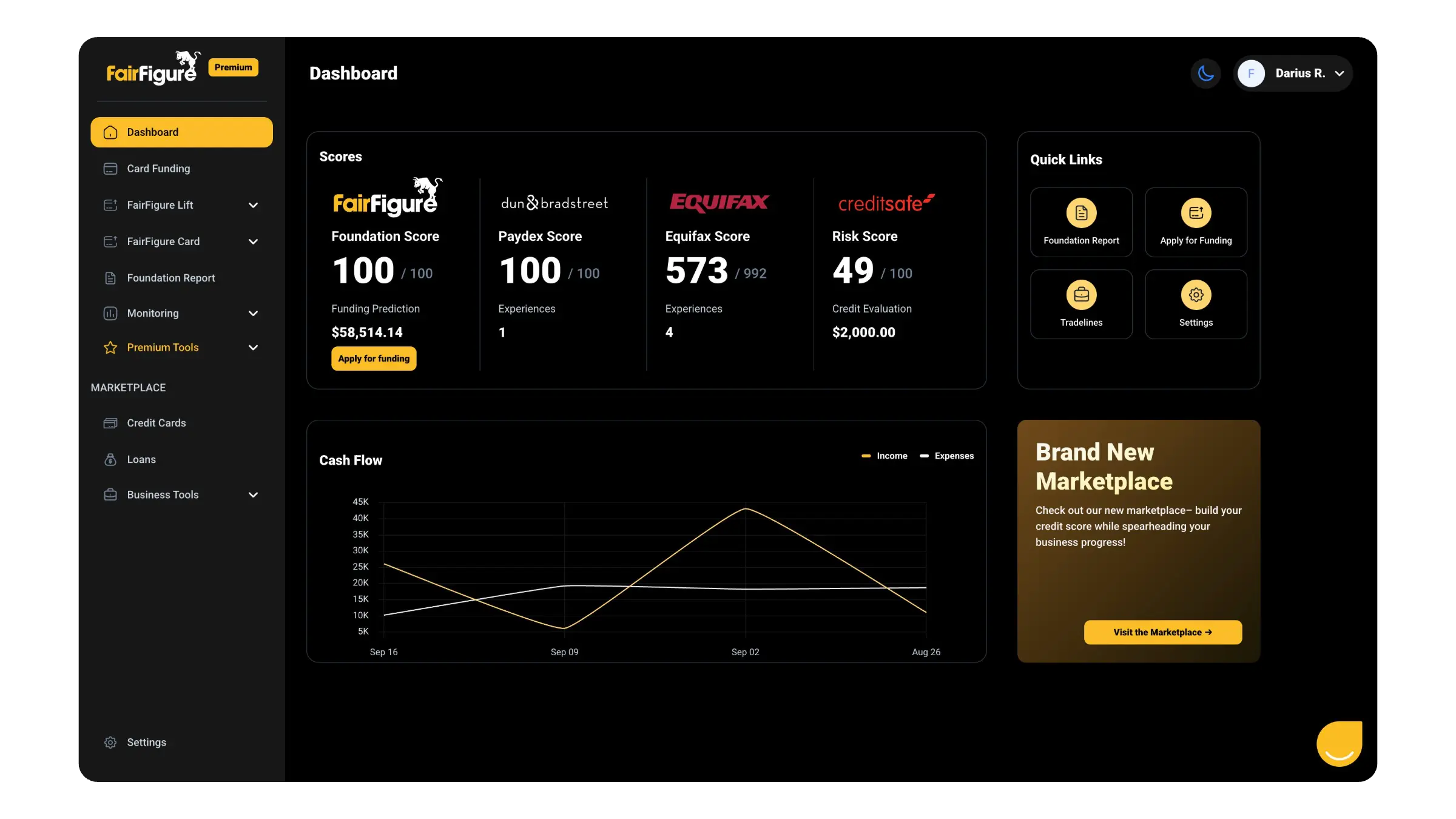
Our business credit monitoring service helps you build credit and track your progress. With credit score monitoring and our FairFigure Foundation Report, you can stay on top of your business credit as you work toward higher scores.
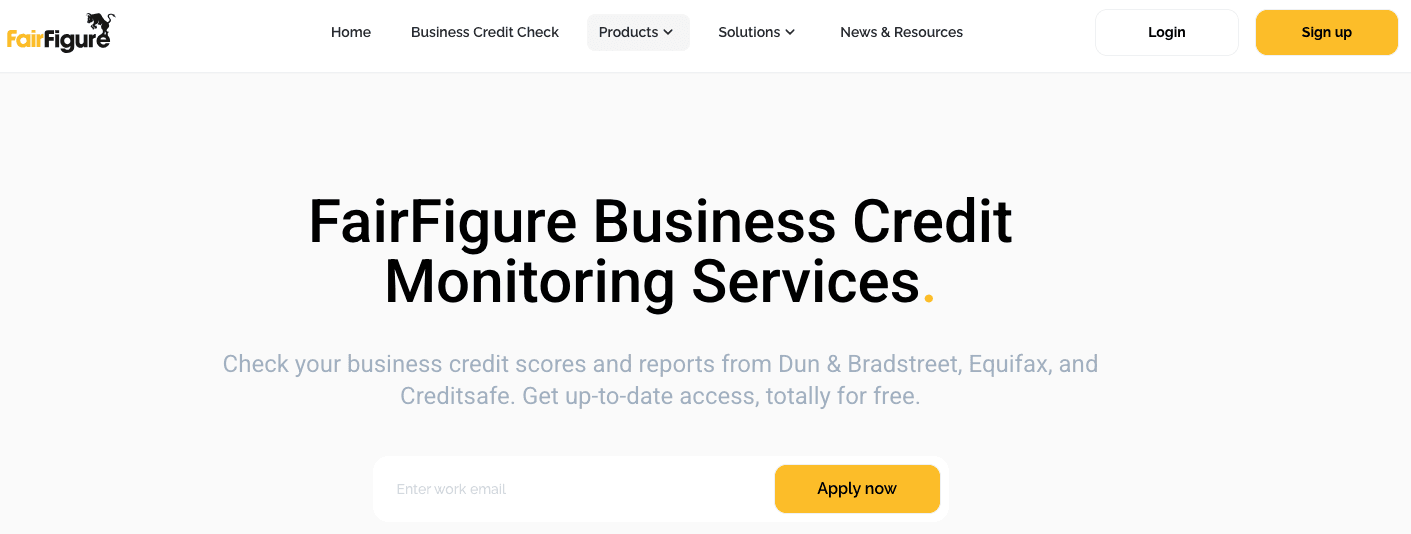
Every $30/month payment is reported as a tradeline to multiple business credit bureaus. These include Experian, Equifax, and Creditsafe. Alongside reporting to commercial credit bureaus, we also report to our Foundation Report.
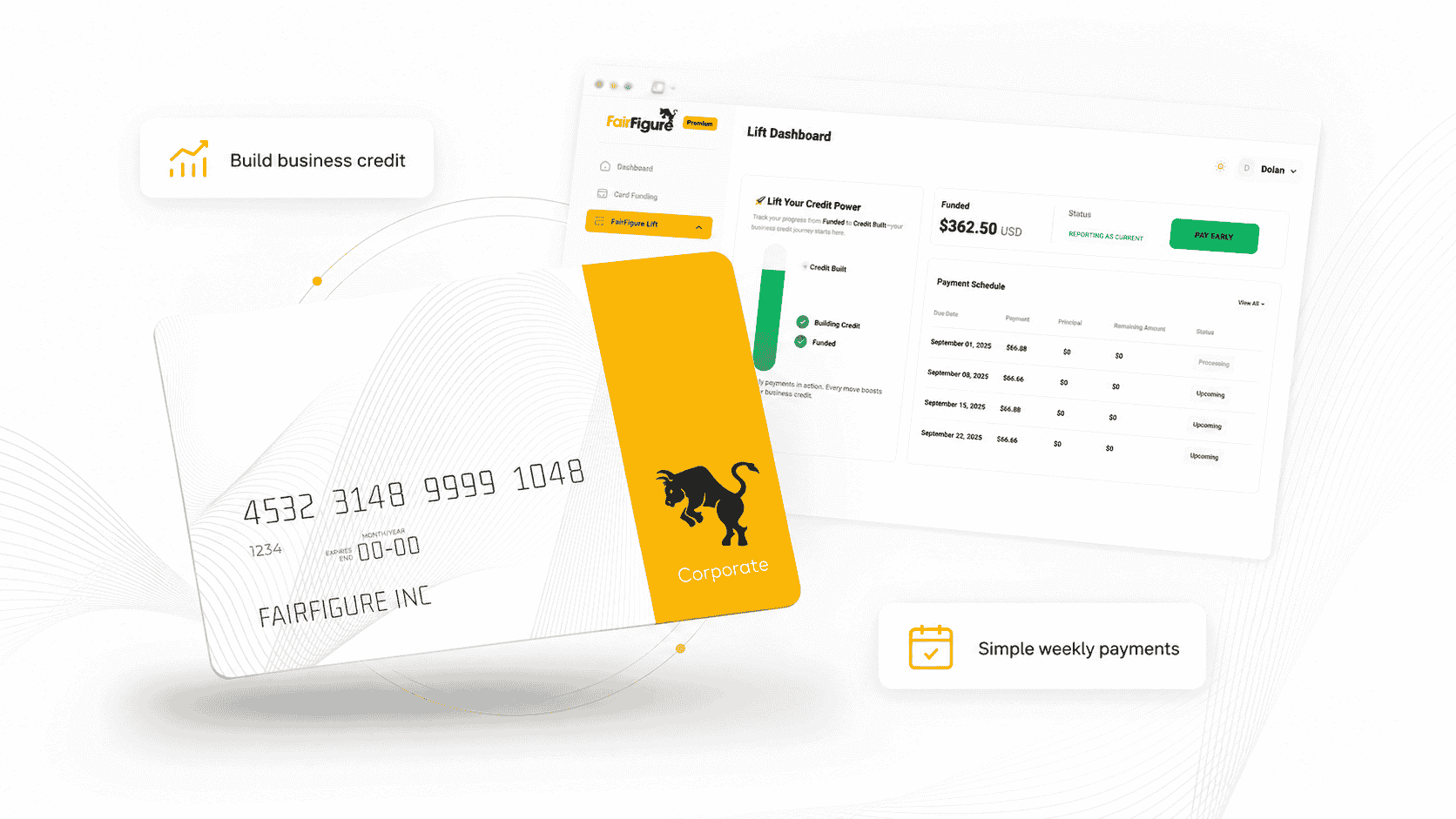
With a monthly subscription, you also unlock access to multiple financing solutions. You can fund your business with the EIN-only FairFigure Lift Card. This acts as a second tradeline to help you build business credit.
Register for FairFigure today to speed up your business credit-building journey!
More articles
Read More >
September 17, 2026
2 min read
September 17, 2026
11 min read
September 17, 2026
5 min read
Start your credit building journey for your business
Start your credit journey now with FairFigure