What Is the SBSS Score? +How They Help You Get SBA Loans
Author: Nick Mann
September 10, 2026
8 min read
TABLE OF CONTENTS
Start your credit building journey for your business

The Small Business Administration (SBA) uses the SBA Standardized Scoring Model (SBSS) to evaluate the creditworthiness of businesses applying for SBA 7(a) loans and SBA 504/CDC loans.
If you’re seeking business funding, you’ll want to be familiar with the SSBS scoring model and understand credit score requirements to get the small business loan you’re looking for.
And if you have bad credit, you’ll also want to know how to improve your SSBS score before submitting a loan application. For the ins and outs of this, read on.
What Is the FICO SBSS Score?
The SBSS scoring model is a tool that helps the SBA make lending decisions by assessing the risk of default associated with a loan application. The SBSS scoring model uses a combination of financial and non-financial data to evaluate a business's creditworthiness.
Financial data includes information such as the business's credit score, revenue, and debt-to-income ratio. Non-financial data includes information such as the business's ownership structure, industry, and location.
The SBSS scoring model assigns a score to each loan application, which ranges from 0 to 300. A higher score indicates a lower risk of default, and a lower score indicates a higher risk of default. The SBA uses the score to determine the likelihood that a business will be able to repay the loan. (Check out our Business Credit Score Range Calculator.)
Businesses with higher SBSS scores are more likely to be approved for SBA 7(a) loans and SBA 504/CDC loans. The SBA also uses the SBSS score to determine the terms of the loan, such as the interest rate and the length of the repayment period.
How Does The SBA Loan Program Use the SBSS Score?
The SBA 7(a) loan program is the most popular SBA loan program and is designed to help small businesses with their financial needs, such as purchasing equipment, inventory, or real estate. SBA 7(a) loans are guaranteed by the SBA, which means that the SBA will pay off the loan if the borrower defaults.
The SBA 504/CDC loan program is designed to help businesses with long-term, fixed-asset financing. SBA 504/CDC loans are used to purchase real estate, equipment, and machinery, and are typically used for expansion or modernization projects.
Both of these loan programs are designed to help small businesses access the capital they need to grow and succeed. The SBSS scoring model is an important tool that the SBA uses to ensure that the loans are made to businesses that are able to repay them and to make sure that the loans are structured in a way that is beneficial to both the borrower and the SBA.
It's important to note that the SBA doesn't lend money directly to businesses, instead it works through its network of approved lenders, who in turn use the SBSS score to evaluate the creditworthiness of the business and make lending decisions.
In summary, the SBSS scoring model is an important tool that the SBA uses to evaluate the creditworthiness of businesses applying for SBA 7(a) loans and SBA 504/CDC loans.
The SBSS scoring model uses a combination of financial and non-financial data to assign a score to each loan application, which ranges from 0 to 300. The SBA uses the score to determine the likelihood that a business will be able to repay the loan and to determine the terms of the loan.
The SBA 7(a) loan program and the SBA 504/CDC loan program are designed to help small businesses access the capital they need to grow and succeed.
What Is a Good SBSS Score?
What’s considered a good business credit score will depend on the specific type of loan you’re looking for and the lender you apply with. Generally speaking, 160 - 180 is considered a good credit score for a small loan.
Each SBA lender will vary, but many are willing to provide a small business loan under $1 million if you have an SSBS score in this range, as this indicates you are a low-risk borrower.
Note that anything over 180 is generally considered a strong score, and this is the ideal minimum required by many major lenders. The bottom line is that you’ll usually want to have an SSBS score of at least 160 when seeking a small business loan.
Minimum SBSS Scores Needed for SBA Loans
As for the bare minimum SSBS score that’s required, it varies by the type of business loan you’re applying for.
For an SBA 7a Loan and 504/CDC Loan, you’ll need a minimum of 155 to be considered for financing.
For an SBA Express Loan, there isn’t a specific minimum SSBS credit score. However, most lenders require small business owners to have at least a score of 160 to be considered.
When it comes to CAPLines, you’re looking at around 155. The same is true for an SBA Microloan and the Export Working Capital Program (EWCP), where most small business financing lenders require a minimum score of 155.
As for SBA Disaster Loans, the business credit requirements are less stringent, and some lenders may go as low as 140.
Because these loans are designed to help business owners recover and stimulate local economies, lenders are more generous with their minimum requirements. While having a score of 140 by no means guarantees approval, it should at least ensure consideration.
Note that hitting these minimum SBSS scores doesn’t guarantee small business owners will be approved. Many lenders require higher business credit scores of 160 or even 180, according to Funding Circle, especially for larger loans.
Therefore, it’s important to understand which factors contribute to attaining a favorable SSBS score and doing everything within your power to improve your credit score.
This brings us to our next section.
How Can I Improve My SBSS Score?
Several factors impact business credit scores, but there are four main areas to focus on to achieve good credit.
First, establish business lines of credit by getting a business credit card and using it responsibly, always making payments on time or in advance.
Just as you want to make personal credit card payments on time to raise your personal credit score, the same is true when building your business credit score.
Next, build business tradelines by opening accounts with vendors and suppliers that report to at least one major business credit bureau.
Often vendors and suppliers will offer 30, 60, or 90-day trade credit payment terms, giving you extended time to pay your invoices. Again, always be sure to pay on time or in advance to build business credit.
Third, use credit monitoring to stay on top of your business credit report, ensuring there aren’t any errors or inaccuracies, as these can lower your business credit score.
It’s just the same as issues with your personal credit report can lower your personal credit score. Ideally, you should check your business credit report at least once per year.
Finally, be sure to follow business financial best practices just as you would with personal credit best practices. Consistently strive to reduce your debt, minimize credit utilization, and maintain good cash flow.
These all signal to a lender that you’re responsible and can manage your finances effectively, which are essential to improving your business credit history.
Use FairFigure to Improve Your Business Credit
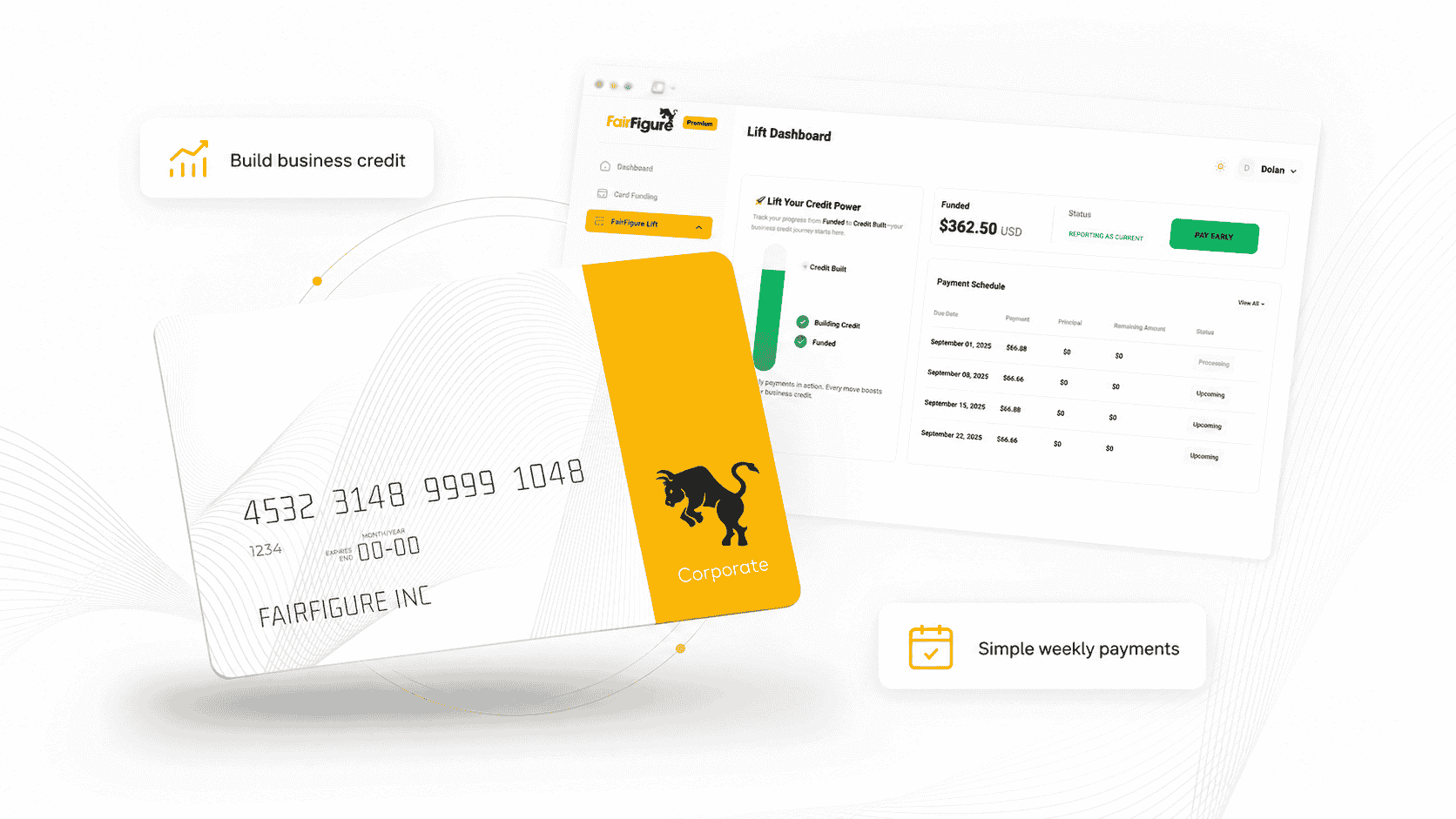
A simple way to raise your business credit score is by using FairFigure, which helps in three ways.
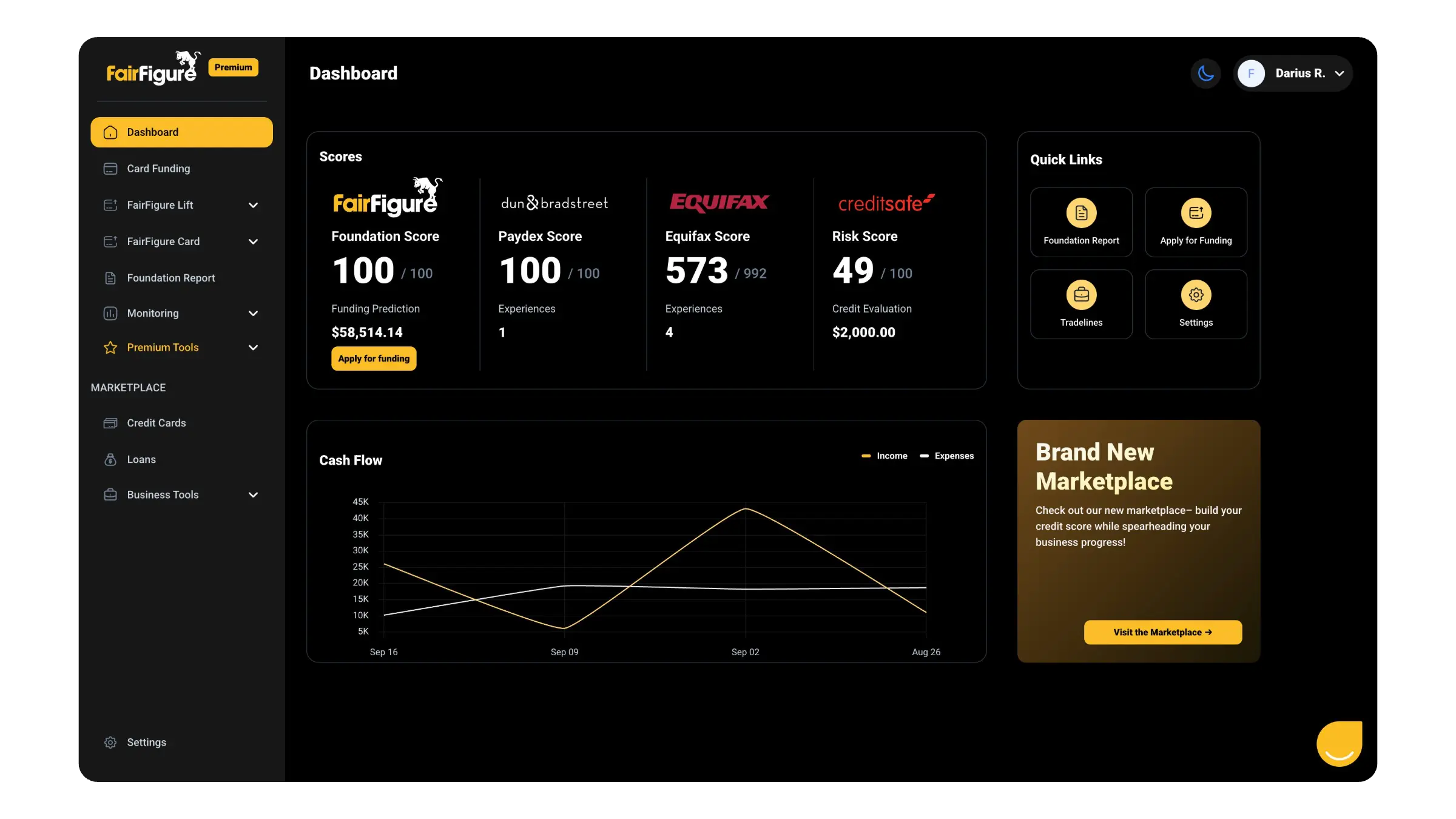
One, you can use our small business scoring service to conveniently monitor your business credit data in real-time.
If there are any errors or inaccuracies on your business credit report they can be quickly corrected. That way your business credit won’t be adversely affected due to no fault of your own.
It’s just the same as quickly spotting issues with your personal credit report to prevent your personal credit from taking a hit.
Two, your FairFigure subscription payment history gets reported to multiple business credit bureaus. In turn, this serves as a financial tradeline, where your positive payment history can help raise your business credit score and improve your overall credit history.
Three, your FairFigure Lift Card payment history also gets reported, giving you an additional credit account boost. All you need to apply for this business credit card is an EIN, meaning your personal credit isn’t taken into account.
Put it all together and FairFigure can raise your business credit by as much as 60% in just three months.
Looking long-term, this can help you achieve a stronger business credit history, making it easier to qualify for a business loan and the best credit card options with favorable terms and interest rates.
More articles
Read More >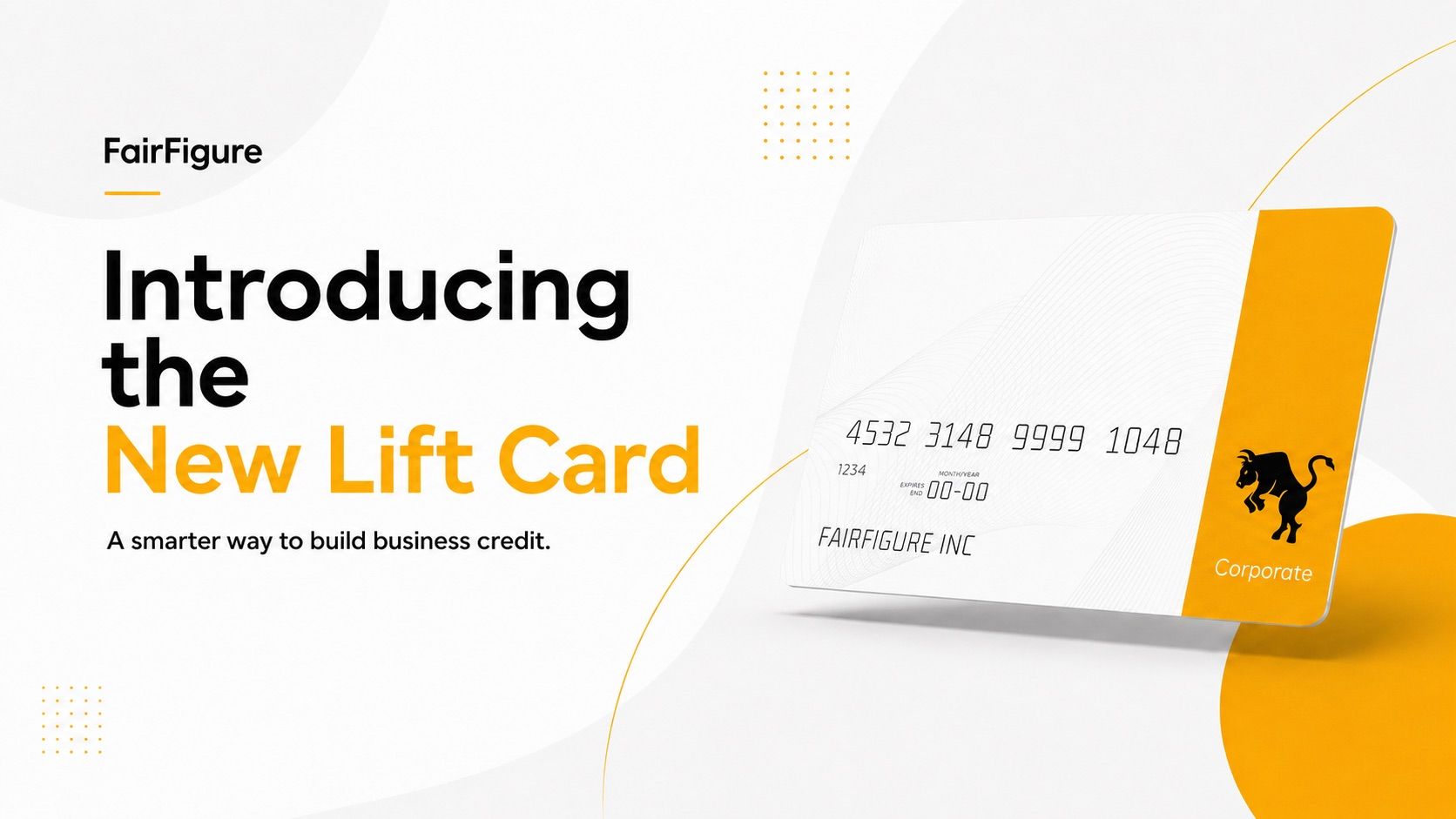
September 17, 2026
2 min read
September 17, 2026
11 min read
September 17, 2026
5 min read
Start your credit building journey for your business
Start your credit journey now with FairFigure