The SBFE Credit Report
Author: Nick Alex Gallo
December 04, 2025
6 min read
TABLE OF CONTENTS
Start your credit building journey for your business

If you’re looking to raise additional capital, the SBFE plays an important role in the process.
In short, the SBFE doesn’t sell credit reports to small businesses. That being said, it does affect your business credit reports from the other business credit bureaus.
We’ll explain how you can use it to your advantage in your credit-building efforts below.
What Is the SBFE?
The Small Business Financial Exchange (SBFE) is one of the top data exchanges in the United States.
While it gathers business credit information from more than 140 different lenders—including the top 10 commercial banks—it’s not a commercial credit reporting agency in its own right.
Instead, the SBFE pools the data it collects from lenders and shares it with various commercial credit bureau partners. These include Dun & Bradstreet (D&B), Experian, Equifax, Lexis Nexis, and bluCognition.
Formed in 2001 by leaders in the small business lending industry, the SBFE operates as a trade association. Only member lenders can contribute to its database or purchase products from the exchange’s credit bureau partners that leverage SBFE data.
Is There an SBFE Credit Report?
There is no SBFE credit report available to companies or business owners because the SBFE isn’t actually a commercial credit bureau. While the organization does gather payment history and other lending information, that data isn’t available to the public.
Instead, the SBFE only shares its insights with a handful of major commercial credit bureau partners, like D&B. In turn, these credit reporting agencies use the information to help create their respective reports and scores.
In other words, you can’t obtain a business credit report directly from the SBFE, but those you get through its partners may contain information from the data exchange.
Is There an SBFE Credit Score?
Just as there is no SBFE credit report, there’s no SBFE business credit score either. The SBFE doesn’t use the information it gathers to create any credit products internally.
It only shares lending data with its commercial credit bureau partners, which then use those insights to help generate certain business credit scores.
For example, the D&B SBFE Score incorporates D&B and SBFE data. The model is designed to predict a business’s likelihood of becoming 91+ days past due on any obligation in the next 12 months, triggering a charge-off, or filing for bankruptcy.
How the SBFE Affects Your Business Credit
When you borrow from a lender that’s an SBFE member, it will report your payment history and other relevant account information to the data exchange each month. While the SBFE keeps most of its members’ identities confidential, known examples include:
- Wells Fargo
- Bank of America
- Capital One
- American Express
- PNC Bank
- Truist Bank
- Wallace Capital Funding
- Wright-Patt Credit Union
Once these lenders pass your information to the SBFE, the data exchange makes it available to its business credit bureau partners. Once again, these include the three major commercial credit agencies, plus LexisNexis Risk Solutions and bluCognition.
Subsequently, the bureaus combine SBFE payment data with various other datasets—such as Secretary of State filings and trade credit data—to generate various business credit reports, scoring models, and credit scores.
However, that doesn’t mean every business credit product includes SBFE data. All of the business credit bureaus offer multiple credit reports and scores that leverage different data sources, with only a subset incorporating SBFE payment history.
How to Build Credit Through the SBFE
Because the SBFE shares payment history data with its network of commercial bureaus, you can use it to strengthen your company’s credit profile. To get started, you’ll need to open credit accounts with small business lenders that report to the exchange.
Fortunately, many credit issuers disclose which bureaus and data exchanges they report to, making it easy to identify prospects.
For example, FairFigure reports both the FairFigure Capital Card and the FairFigure Lift account to the SBFE, as well as Equifax and CreditSafe.
If you’re looking for additional options, focus on traditional funding options that appear as financial tradelines in credit reports. For example, these include business loans, lines of credit, and credit cards.
Not only do these typically have a stronger impact on your business credit, but the SBFE also refuses to accept payment data for trade credit. These generally come from vendors and suppliers, such as net 30 or net 60 accounts.
This can make it harder for new small businesses to build credit through the SBFE, since traditional funding often requires stronger business credit history.
Beyond exceptions like FairFigure, a business credit card may be your best option, though they usually require a personal credit score check and a guarantee.
Should the SBFE Be a Focus of Your Credit Building Efforts?
While it can be beneficial to have the SBFE reporting positive payment history on your behalf, it probably shouldn’t be the focus of your credit-building efforts. The real goal is to build credit with the business credit bureaus, especially D&B, Equifax, and Experian.
These organizations are ultimately responsible for the credit reports and scores that prospective lenders, partners, and investors will review when evaluating your business. As a result, your credit-building strategy should focus on building credit with them first.
Since the credit bureaus do accept trade credit data, it’s often beneficial to start with vendor accounts that report to them. Once you’ve established a foundation, you can move on to more traditional financing options, like loans and lines of credit.
Throughout the process, prioritize timely payments.
While business credit scoring models differ from consumer algorithms, payment history is still typically the most important factor. In some cases, such as with the D&B PAYDEX Score, you’ll need to make payments before they’re due to maximize your credit rating.
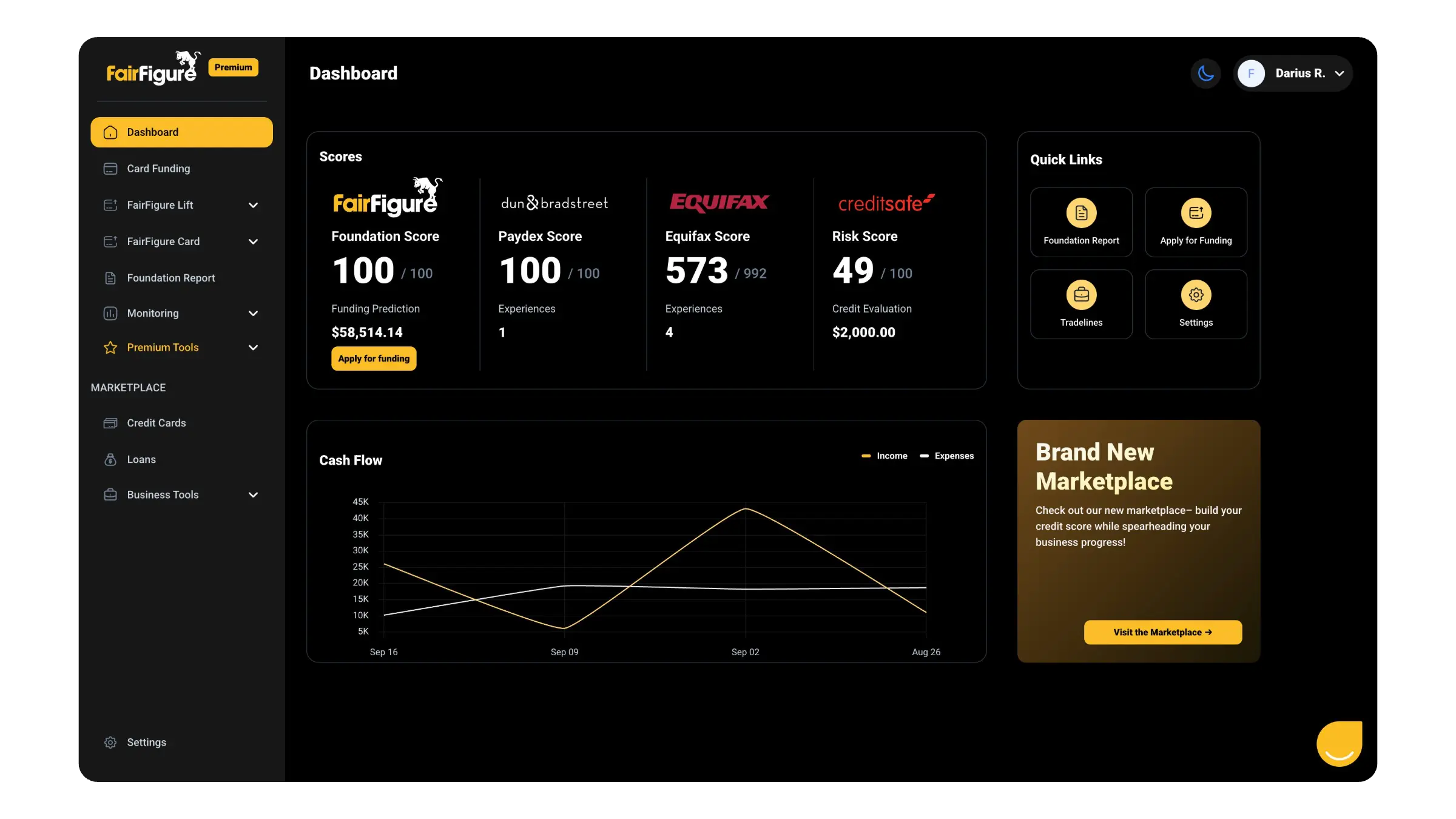
Business credit monitoring services can be invaluable for helping you keep track of your progress. Sign up for FairFigure to gain access to your D&B, Equifax, CreditSafe, and Foundation reports and scores.
More articles
Read More >
September 15, 2026
12 min read
September 10, 2026
7 min read
September 10, 2026
8 min read
Start your credit building journey for your business
Start your credit journey now with FairFigure